Your avocado toast just got a protein upgrade!
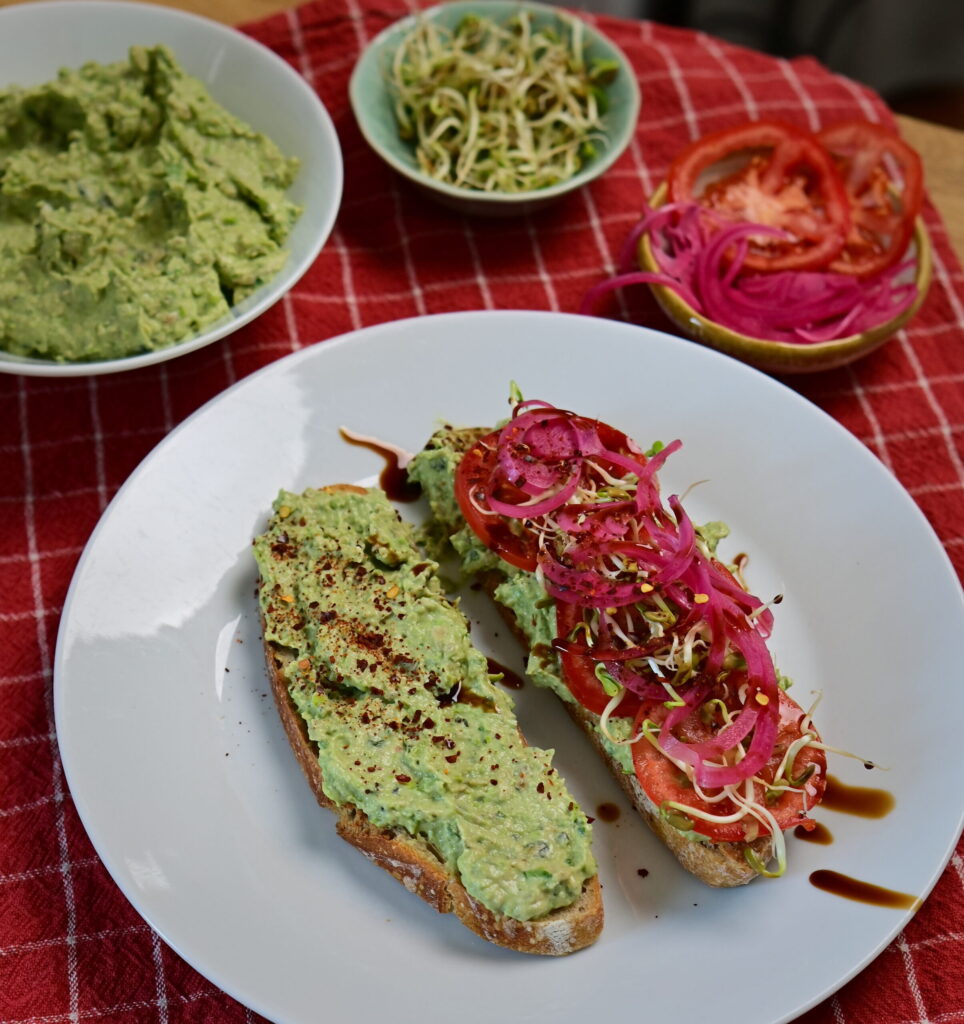
Table of contents
About this recipe
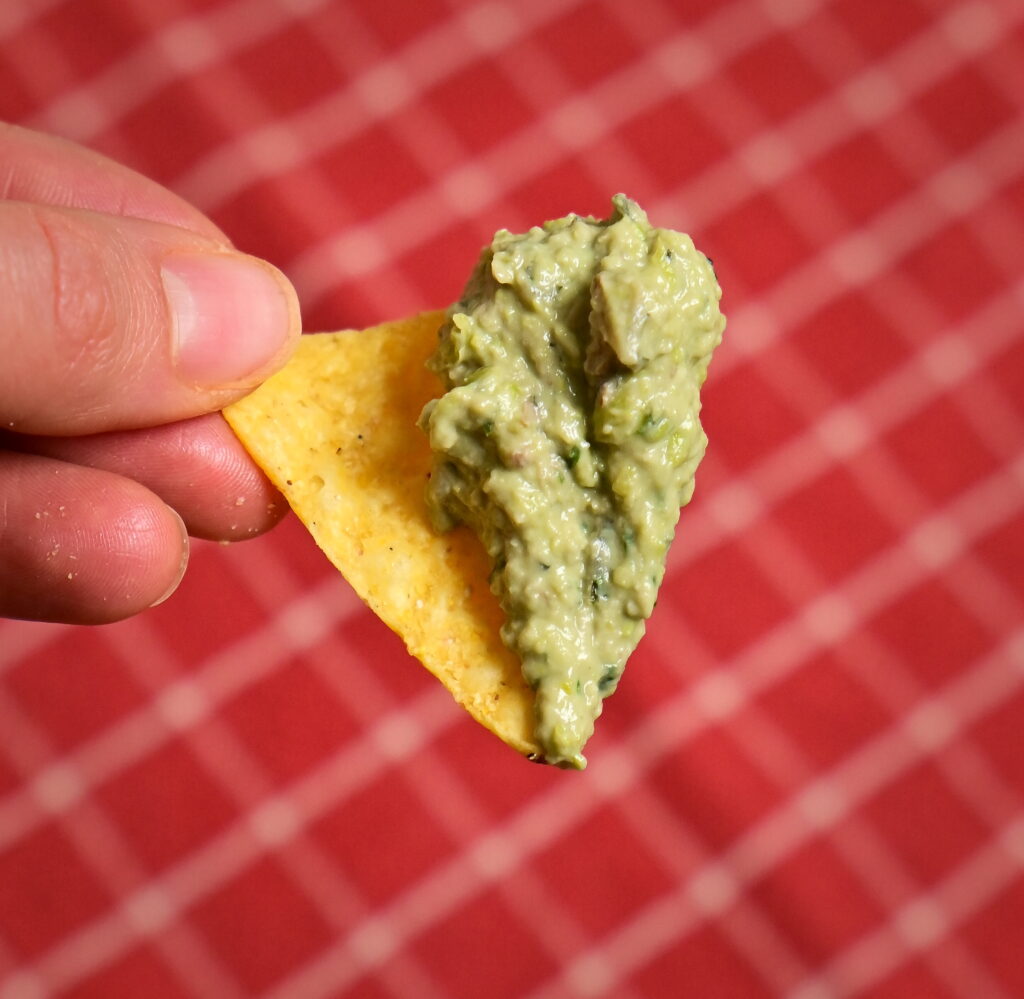
I love a nourishing toast in the morning, especially when I can turn it into a full meal in about five minutes. This avocado pea spread is one of those recipes that looks much more impressive than the effort it takes.
It’s made with simple whole-food ingredients, including peas, avocado, walnuts, pumpkin seeds, and fresh herbs. You get plenty of fiber, plant-based protein, healthy fats, vitamins, minerals, and antioxidants in one colorful spread.
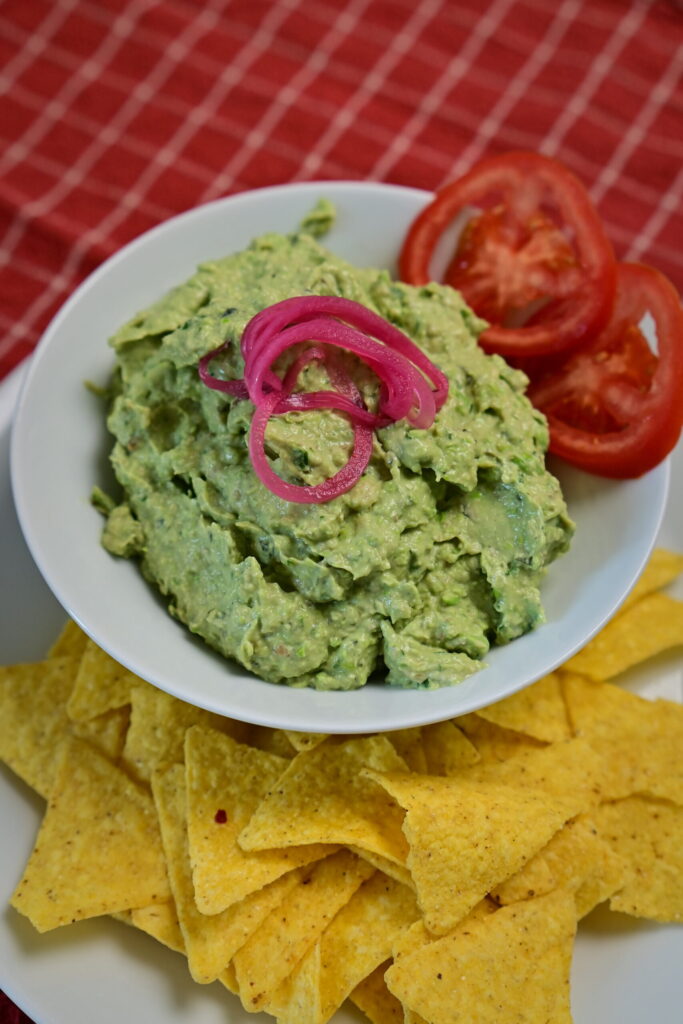
I love how creamy it gets while still keeping some texture from the nuts and seeds. Spread it on your favorite toast and add whatever fresh toppings you have around. It’s quick, filling, nourishing, and actually fun to look at first thing in the morning.
Basically, a full breakfast without turning your kitchen into a breakfast restaurant.
IBS & Low-FODMAP Tips:
- Green peas: Keep to about ¼ cup (45 g) per serving for a low-FODMAP portion.
- Avocado: Keep to about 30 g per serving, roughly ⅛–¼ of an avocado, depending on its size.
- Because the recipe makes 4 servings, using larger amounts of peas or avocado means the final serving may contain more FODMAPs than the listed low-FODMAP portions.
- If you want a higher-protein version, edamame can replace the peas, but portion size still matters for FODMAP tolerance.
- For an IBS-friendly breakfast, serve the spread with a suitable gluten-free or sourdough bread and toppings you know you tolerate.
- Individual tolerance varies, especially with legumes, avocado, nuts, and seeds, so adjust the portion according to your own tolerance.

Why This Spread Is Healthy
This spread combines several nutrient-dense whole foods into one satisfying meal. Green peas provide plant-based protein, fiber, vitamins, and minerals, while pumpkin seeds and walnuts add healthy fats, protein, magnesium, zinc, and other micronutrients.
Avocado contributes fiber, potassium, folate, and heart-healthy monounsaturated fats. Fresh herbs add antioxidants and extra micronutrients, while nutritional yeast can provide additional protein and B vitamins.
The combination of peas, seeds, nuts, and avocado makes the spread especially satisfying, while serving it on whole-grain or gluten-free sourdough bread can turn it into a balanced, filling breakfast.
Ingredient Notes & Substitutes
Green peas – Frozen peas are convenient, naturally sweet, and provide fiber, plant-based protein, vitamins, and minerals. Thaw them at room temperature or in the microwave before using.
Avocado – Adds creaminess and healthy monounsaturated fats. Add more if you want a softer, creamier spread.
Lemon juice – Adds brightness and acidity that balances the creamy avocado and earthy peas.
Walnuts – Add healthy fats, plant-based protein, minerals, and a delicious nutty texture.
Pumpkin seeds – Add protein, healthy fats, magnesium, zinc, and extra texture.
Basil, cilantro, or parsley – Fresh herbs add color, freshness, and antioxidants. Use whichever you enjoy most.
Nutritional yeast – Adds a savory, slightly cheesy flavor along with additional protein and B vitamins.
Hemp seeds – An optional way to add more protein, healthy fats, and minerals.
Tahini – Adds creaminess, healthy fats, and a nutty, savory flavor.
Chia seeds or ground flaxseed – Add extra fiber, healthy fats, and texture.
Step-by-step short instructions
Recipe card with not

Avocado Pea Spread

Equipment
- Food processor
Ingredients
- ½–1½ cups frozen green peas (thawed (see note 1))
- ½ avocado (or more for a creamier spread)
- 1-2 tbsp lemon juice
- ⅓ cup walnuts
- ¼ cup pumpkin seeds
- ¼ cup fresh basil (or cilantro, or parsley leaves)
- ½ tsp salt
- Black pepper (to taste)
- 1-2 tbsp nutritional yeast
- ½ tbsp hemp seeds
- ½ tbsp tahini
- ½ tbsp chia seeds or ground flaxseed
- A slice of sourdough or your favorite bread
- Toppings of your choice
Instructions
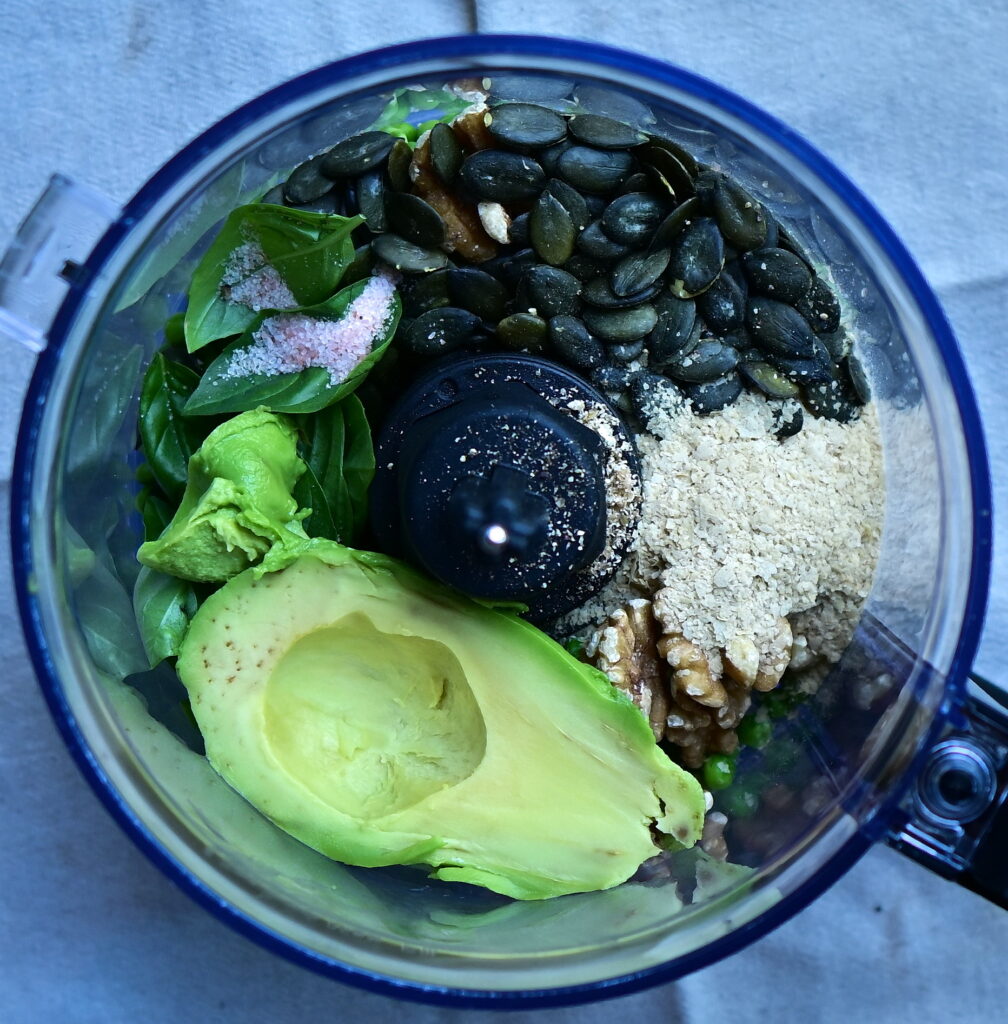
- Add everything to the food processor – Place the thawed peas, avocado, lemon juice, walnuts, pumpkin seeds, fresh herbs, nutritional yeast, and any of the optional ingredients you are using into a food processor.
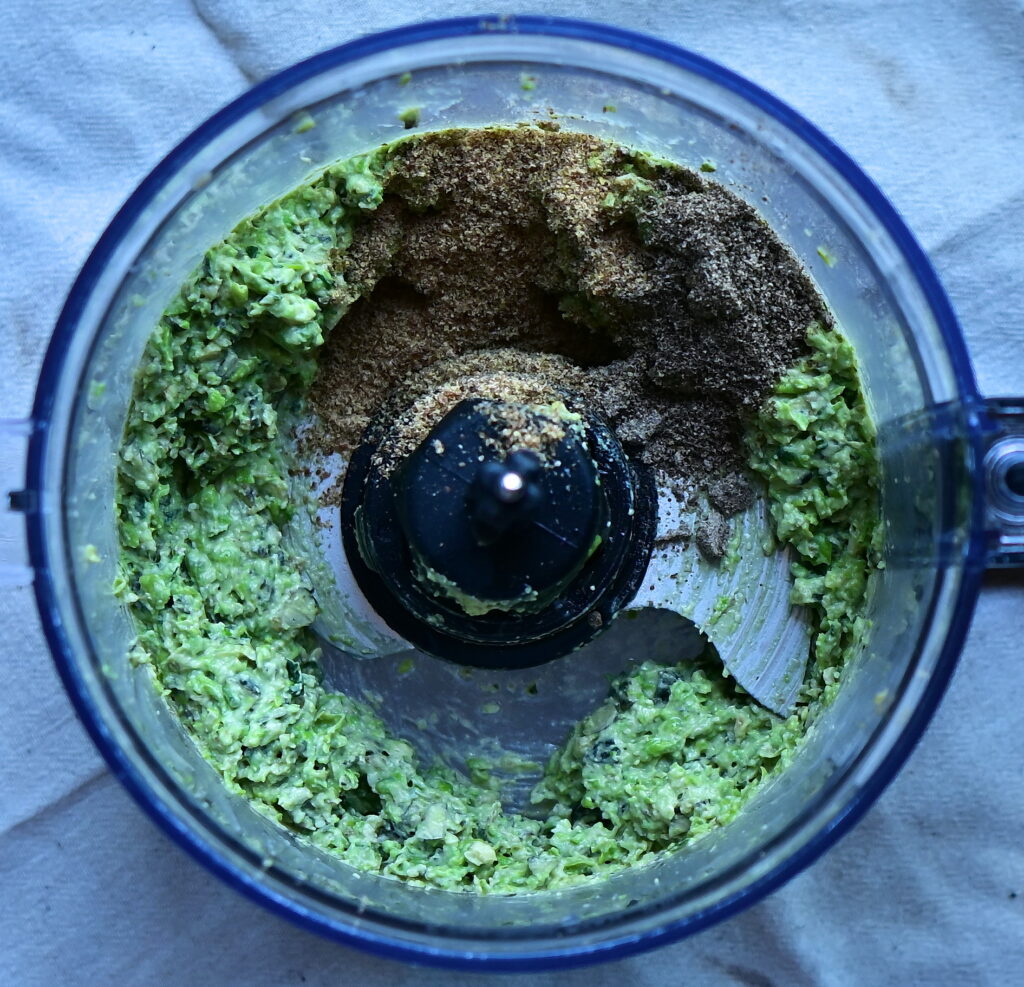
- Start with a few pulses – Pulse several times to break down the larger ingredients. This helps everything combine evenly without immediately turning the spread completely smooth.
- Process until creamy – Switch to low speed and process until the mixture starts coming together. Stop once or twice to scrape down the sides with a spatula so all the ingredients are incorporated evenly.
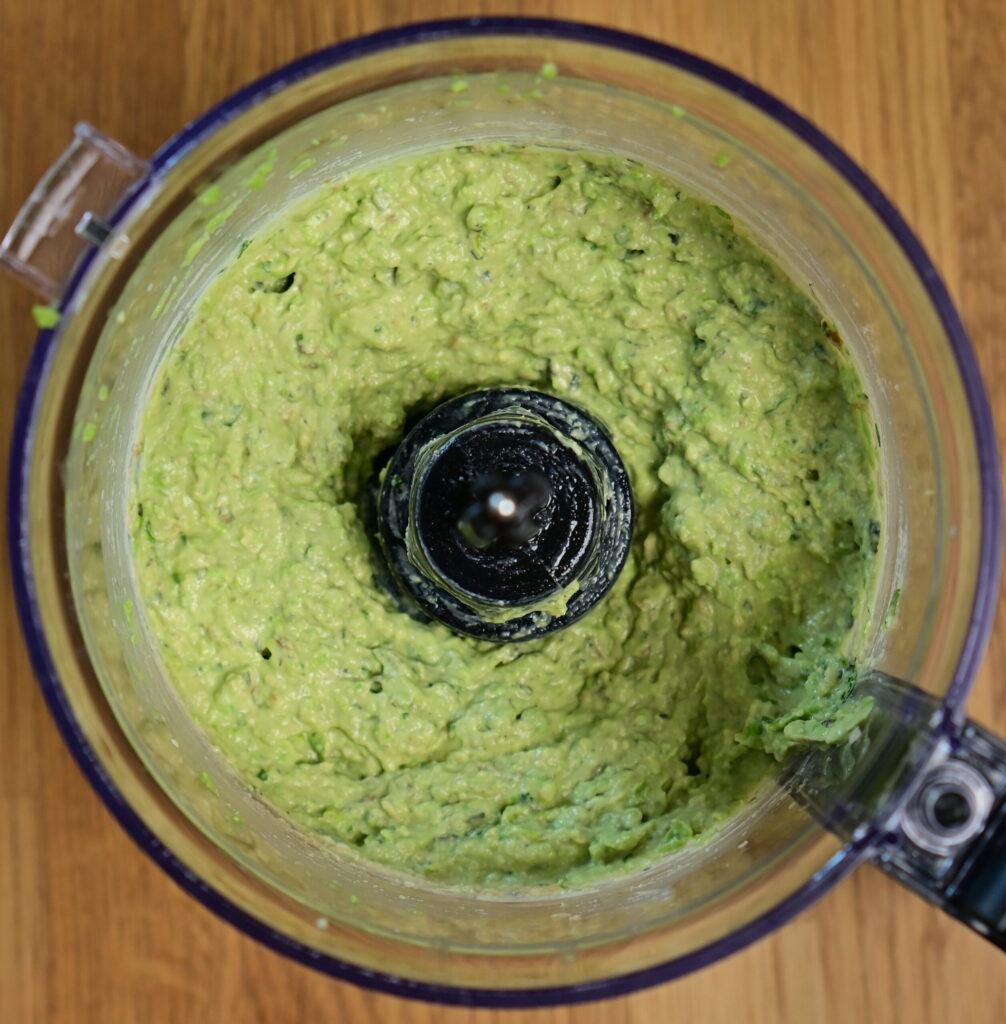
- Keep some texture – Continue processing until you reach your preferred consistency. I personally like leaving some small pieces of walnuts and pumpkin seeds in the spread rather than making it completely smooth.
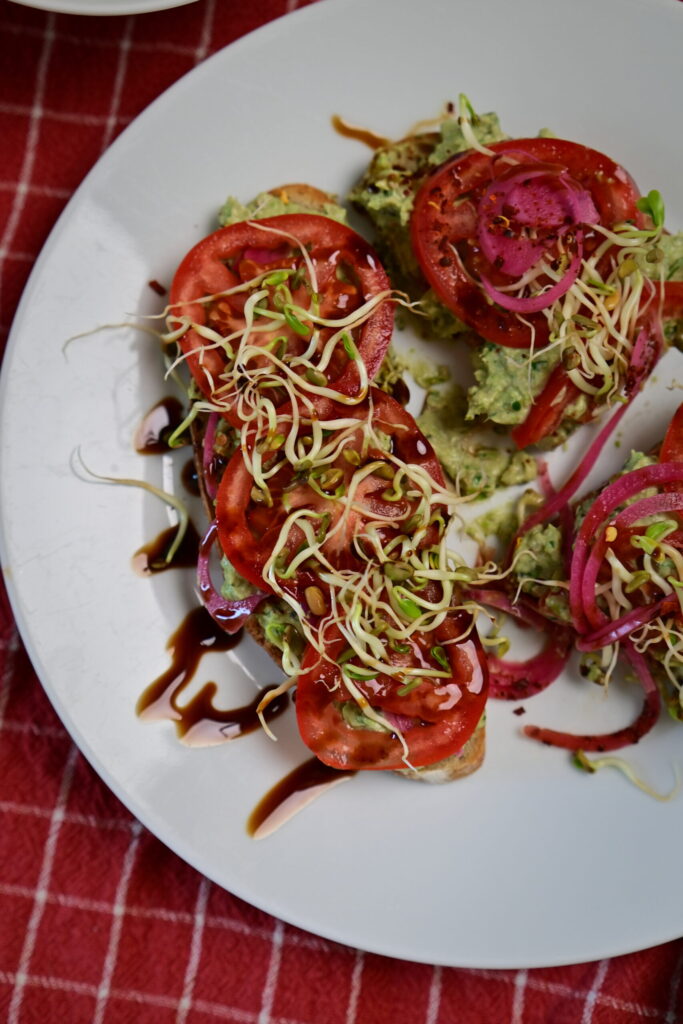
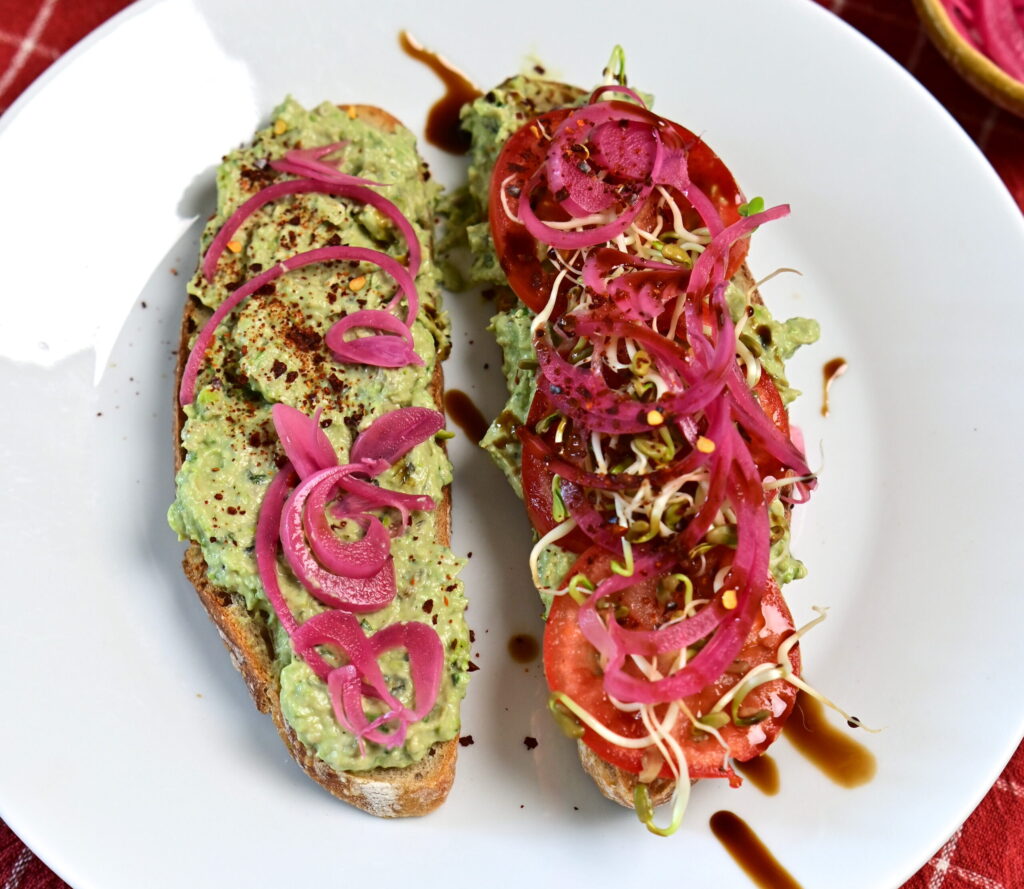
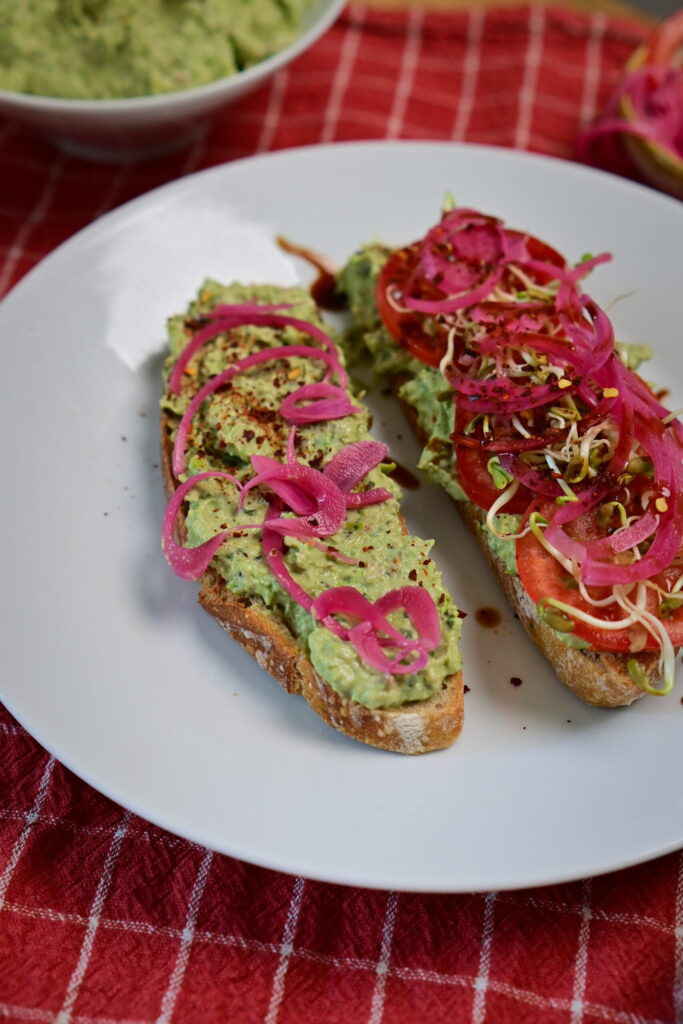
- Serve – Spread generously over your favorite toast and add your preferred toppings. I love it on sourdough with fresh tomato slices and sprouts, or with cherry tomatoes on the side.
Video
Notes
- Pea or edamame version: You can replace the green peas with edamame. If your goal is to make this a particularly protein-rich meal, increase the amount of peas or use edamame, while keeping your individual FODMAP tolerance in mind.
- Nut-free option: Replace the walnuts with additional pumpkin seeds, sunflower seeds, or another seed you tolerate. You can also leave them out and increase the pumpkin seeds for a seed-based version.
- Gluten-free: Serve with your favorite gluten-free bread to keep the entire meal gluten-free. If you tolerate sourdough, it also works beautifully here.
- Storage: Store the spread in an airtight container in the refrigerator and use within 2–3 days.
- Texture: The spread will become smoother and softer the longer you process it. For a more rustic texture, use short pulses and stop while small pieces of nuts and seeds are still visible.
- Make it a full meal: For a more substantial breakfast, serve it on 1–2 slices of bread with your favorite low-FODMAP toppings and a side of fresh fruit or vegetables that you tolerate.