The “what should I eat?” problem, solved.
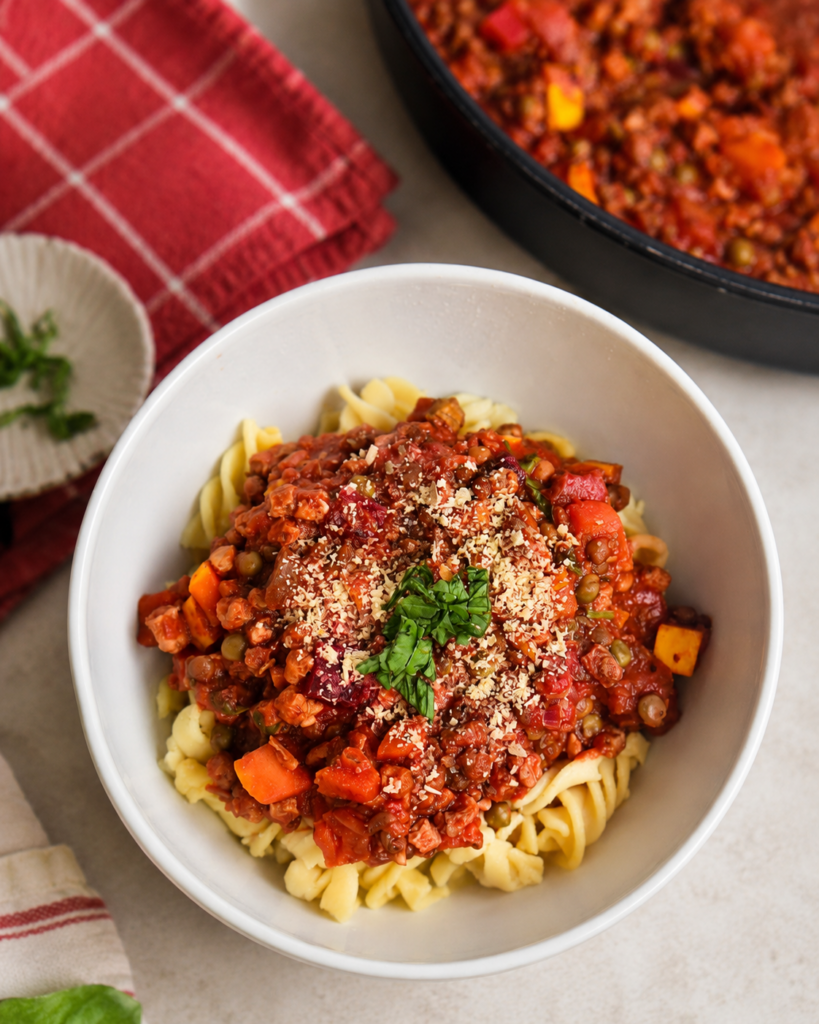
Table of contents
About this recipe
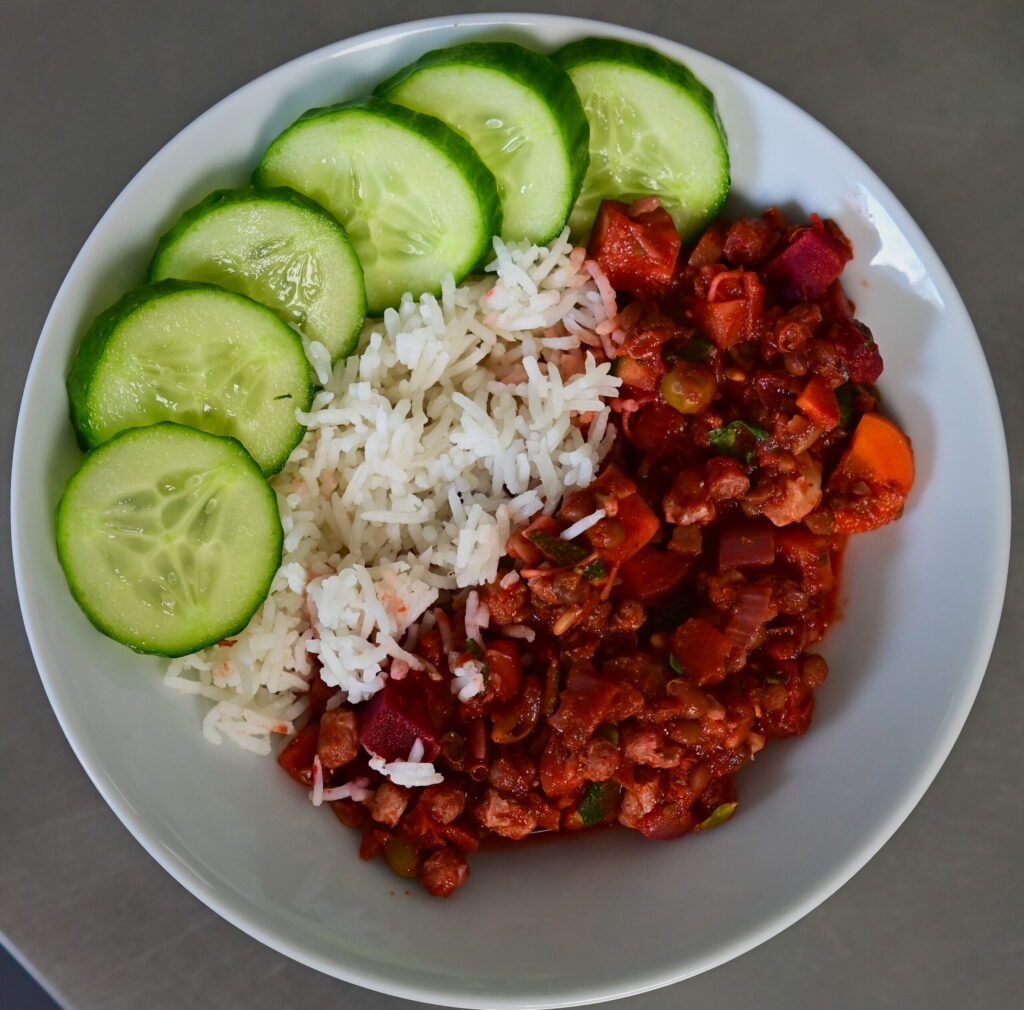
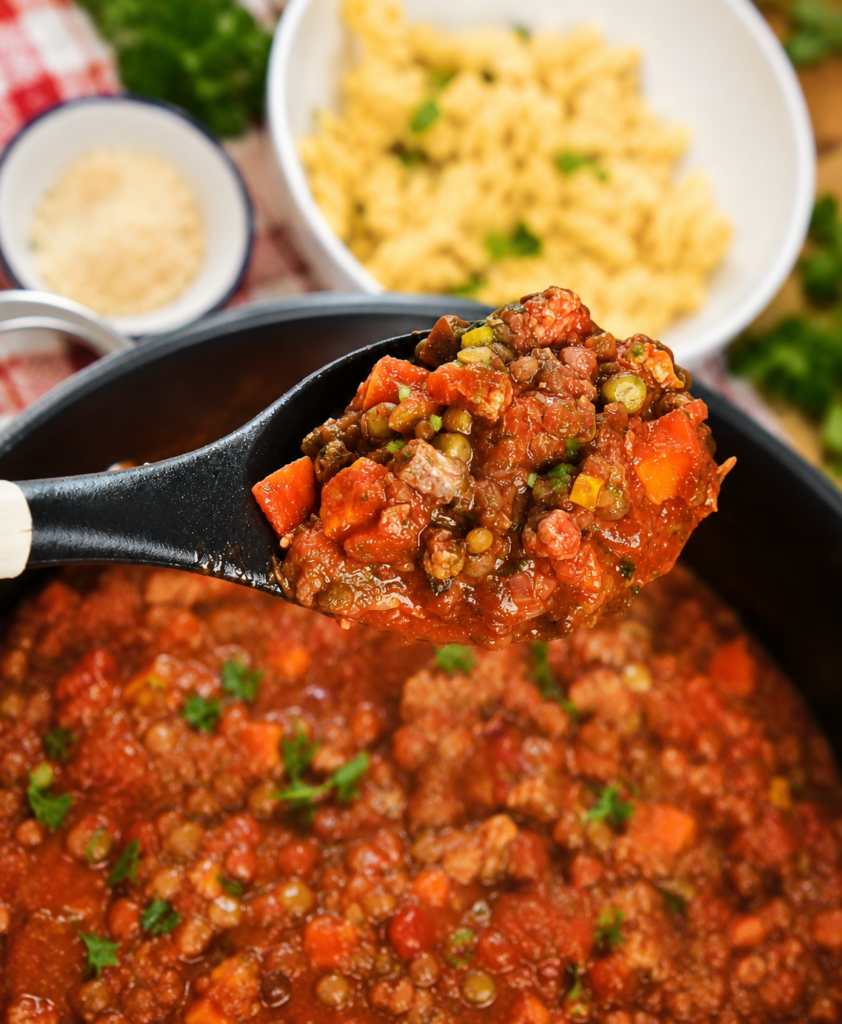
I wanted a way to make adding more fiber and protein to my meals ridiculously easy. So I made this veggie-packed vegan mince: a hearty, flavorful mixture that can go almost anywhere.
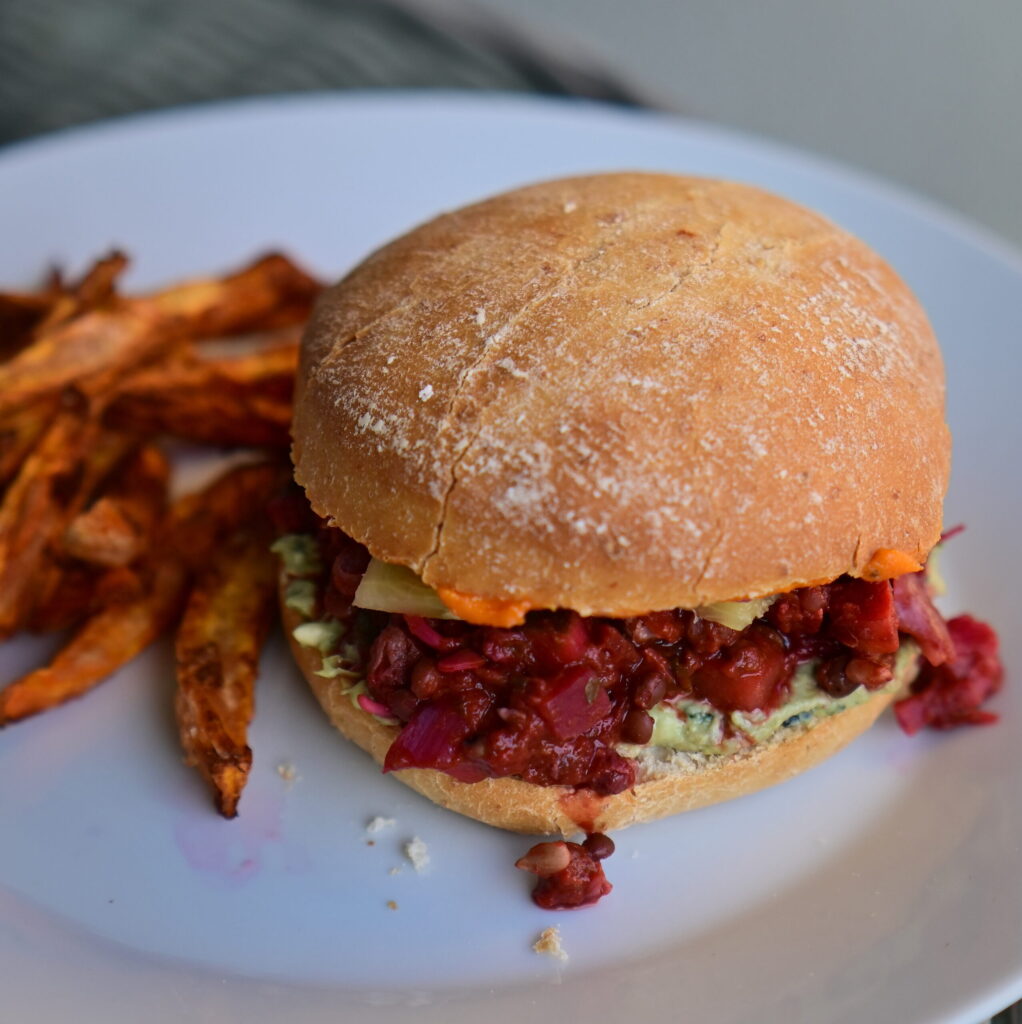
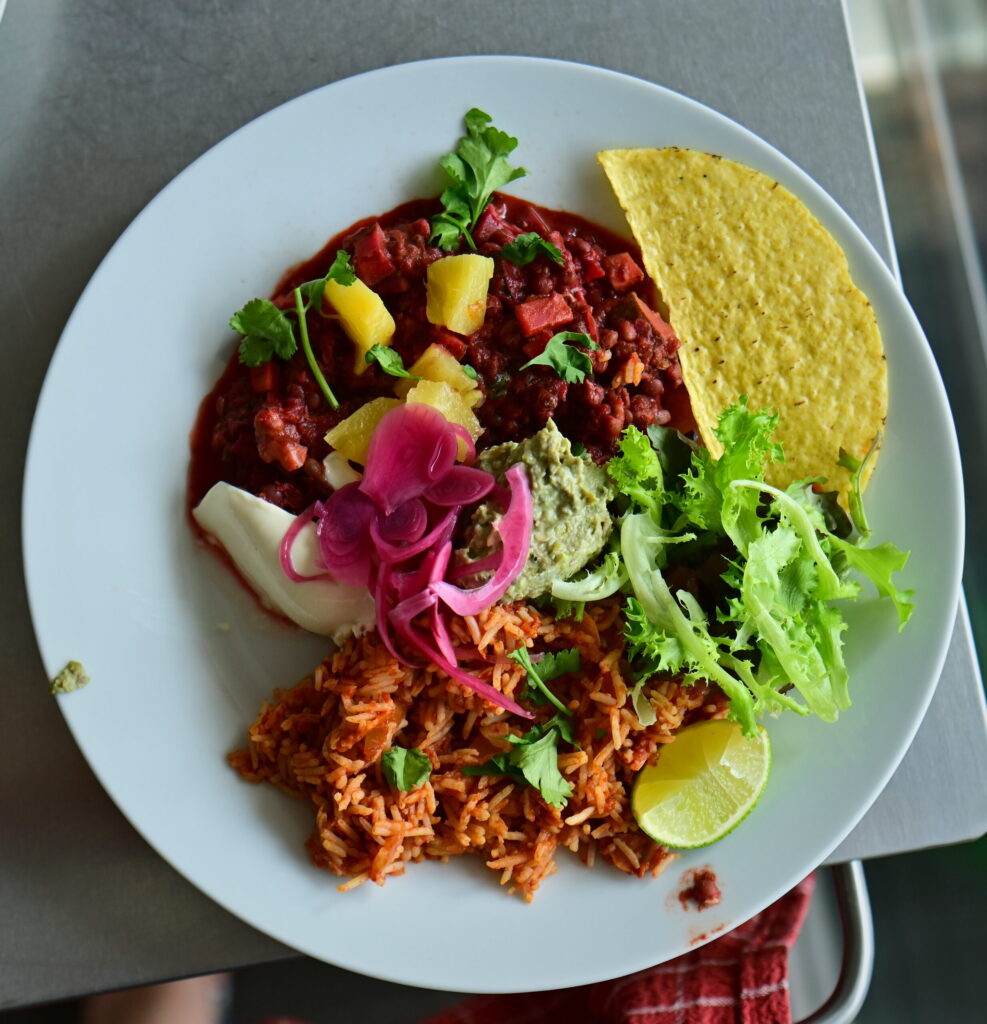
Think bolognese with pasta, a filling for lasagna, sloppy joes, tacos, burritos, shepherd’s pie or even pizza. It’s also wonderfully flexible, so you can swap ingredients depending on what you have in the fridge. That means you can make the same base without feeling like you’re eating the same meal every day.
It’s packed with vegetables, legumes, TVP, nuts, and seeds for plenty of plant-based protein and fiber. Make a big batch ahead of time and keep it in the fridge or freezer for quick meals throughout the week.
Basically, one pot that makes it much easier to stop worrying about where your protein and fiber are coming from.
IBS & Low-FODMAP Tips:
This recipe is naturally very high in fiber, but the full recipe is not low-FODMAP as written because it contains onion, garlic, lentils, peas, and potentially wheat-based TVP. For a lower-FODMAP version, use the following adjustments:
- Onion and garlic: both are high in FODMAPs.
- Canned lentils: draining and rinsing canned lentils helps reduce their FODMAP content. Keep the portion to around ½ cup (approximately 46 g drained) per serving for a more conservative low-FODMAP portion.
- Green peas: keep the portion relatively small; around ¼ cup (approximately 15 g) per serving is a conservative amount for a low-FODMAP meal.
- TVP: check the ingredients and choose a version that works for your individual tolerance. Some TVP products are made from soy, while others may contain wheat.
- Fiber: this recipe contains several high-fiber ingredients, so even when individual ingredients are tolerated, a large serving may still be difficult during an IBS flare. Start with a smaller portion and increase gradually according to your tolerance.
- If you are following the elimination phase of a low-FODMAP diet, adjust the recipe to your personal tolerance rather than assuming that a large serving will be suitable.
Why This Recipe Is Healthy
This mince combines a wide variety of whole-food plant ingredients, making it much more than a simple meat substitute. The vegetables provide vitamins, minerals, antioxidants, and a range of different plant compounds, while lentils, peas, TVP, walnuts, and sunflower seeds add protein and fiber.
The combination of legumes, vegetables, seeds, and nuts also gives the dish a broad mix of nutrients. Fiber helps support regular digestion and a healthy gut microbiome, while protein makes the mince more satisfying and filling.
Because the mixture is so versatile, it can also be an easy way to add more nutrient-dense ingredients to meals you already love — without having to completely change the way you eat.

Ingredient Notes & Substitutes
Onion – Red or yellow onion both work, and you can also use 2 shallots.
Garlic – Use a few cloves according to taste. For a low-FODMAP version, omit it or use garlic-infused oil if tolerated.
Zucchini – Use either yellow or green zucchini; both work well here.
Beet – Fresh beet adds natural sweetness, color, and antioxidants.
Carrot – A medium carrot adds sweetness, texture, and extra vegetables.
TVP – Use small TVP pieces or mince for a hearty, protein-rich texture. See the notes for substitutions.
Frozen peas – Add sweetness, color, and extra fiber and protein.
Walnuts – Chopped walnuts add texture, healthy fats, and a slightly meaty bite.
Canned tomatoes – Use your favorite canned tomatoes; whole or chopped both work.
Tomato paste – Concentrated tomato flavor that makes the sauce richer and deeper.
Passata – Use unseasoned tomato passata for a smooth, rich tomato base.
Nutritional yeast – Adds savory, cheesy flavor and extra nutrients.
Sunflower seeds – Add extra protein, healthy fats, and texture to the sauce.
Paprika – Adds gentle warmth and depth of flavor.
Dried oregano or basil – Use whichever herb you prefer, or switch between them depending on what you are serving the mince with.
Pasta cooking water – Helps loosen the mixture and brings everything together. Regular water also works.
Balsamic vinegar – Adds acidity and balances the sweetness of the tomatoes and vegetables.
Fresh basil – Adds freshness at the end. Spinach, parsley, or another leafy green can also be used.
Canned lentils – Use cooked lentils that have been drained and thoroughly rinsed. They add substantial protein and fiber.
Step-by-step short instructions
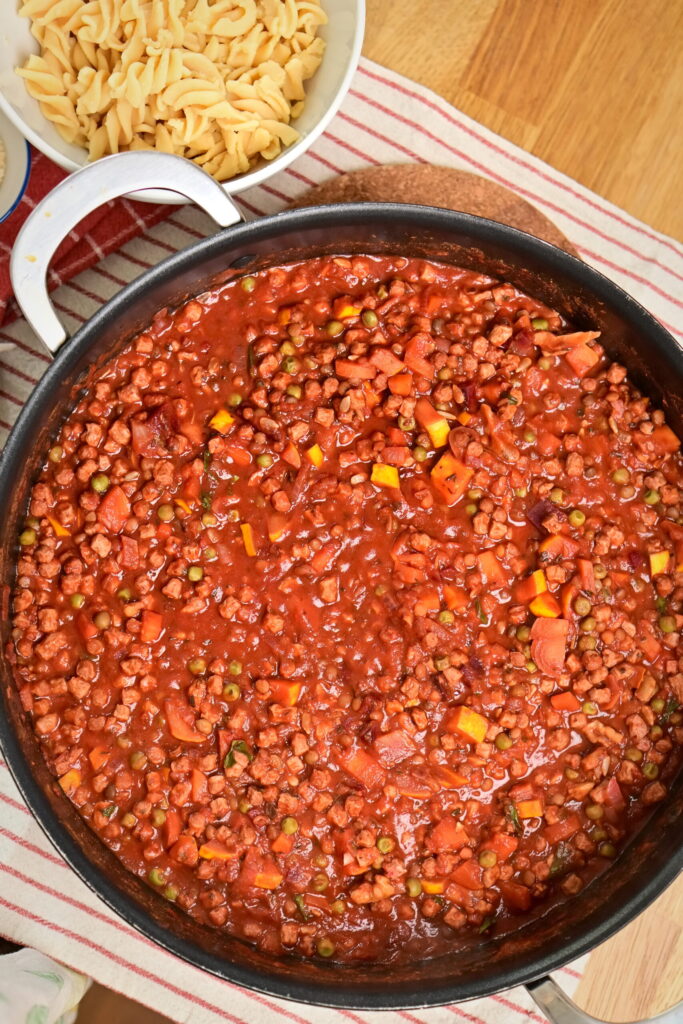
Recipe card with notes
Veggie-Packed Vegan Mince

Equipment
- Large deep skillet
- Knife and cutting board
- Blender or food processor - optional
Ingredients
- 1 medium red or yellow onion (finely chopped (or 2 shallots))
- A few cloves garlic (finely chopped, to taste)
- 1 yellow or green zucchini
- ½ small fresh beet
- 1 medium carrot
- 1 cup TVP (Textured vegetable protein) (small pieces or mince)
- ⅓ cup frozen peas
- A handful of walnuts (chopped)
- 2-3 tsp salt
- Black pepper (to taste)
- ¼ cup nutritional yeast
- ½ tbsp paprika
- 2 tbsp dried oregano or basil
- 2 tbsp sunflower seeds
- 1 cup boiling water
- 1 can canned tomatoes (400g)
- 2 tbsp tomato paste
- 1 cup unseasoned passata
- ½ cup pasta cooking water or boiling water
- 2 tbsp balsamic vinegar
- ¼ cup fresh basil (chopped (or spinach, parsley, or any other leafy greens))
- 1 can cooked lentils (drained and rinsed (265 g / 9.3 oz drained weight))
Instructions
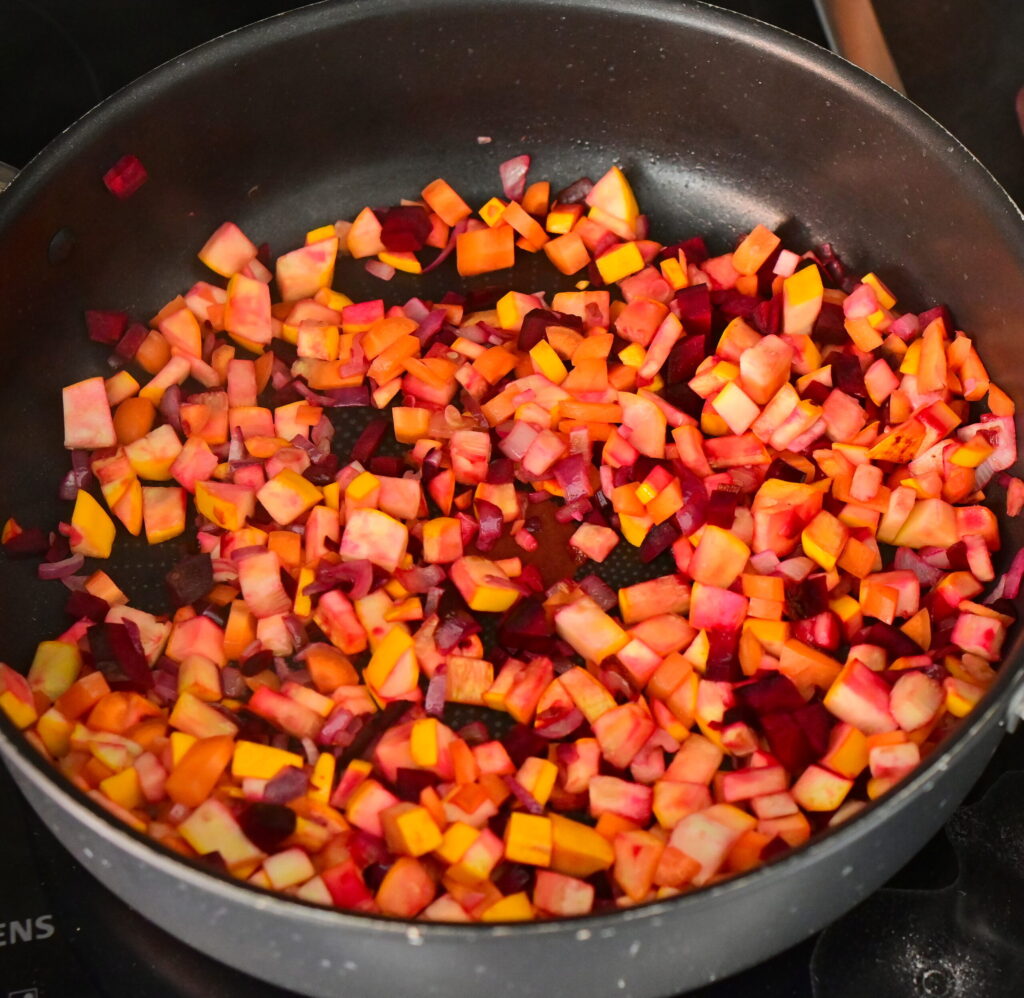
- Chop the vegetables – Start by cutting all the vegetables into small cubes. Finely chop the onion and garlic, and roughly chop the walnuts.
- Soften the onion – Heat a drizzle of olive oil in a large, deep skillet over medium-high heat. Add the chopped onion and sauté for about 2 minutes, stirring occasionally, until it starts to soften.
- Add the zucchini – Add the diced zucchini and cook for another minute. Stir regularly so the vegetables cook evenly without browning too much.
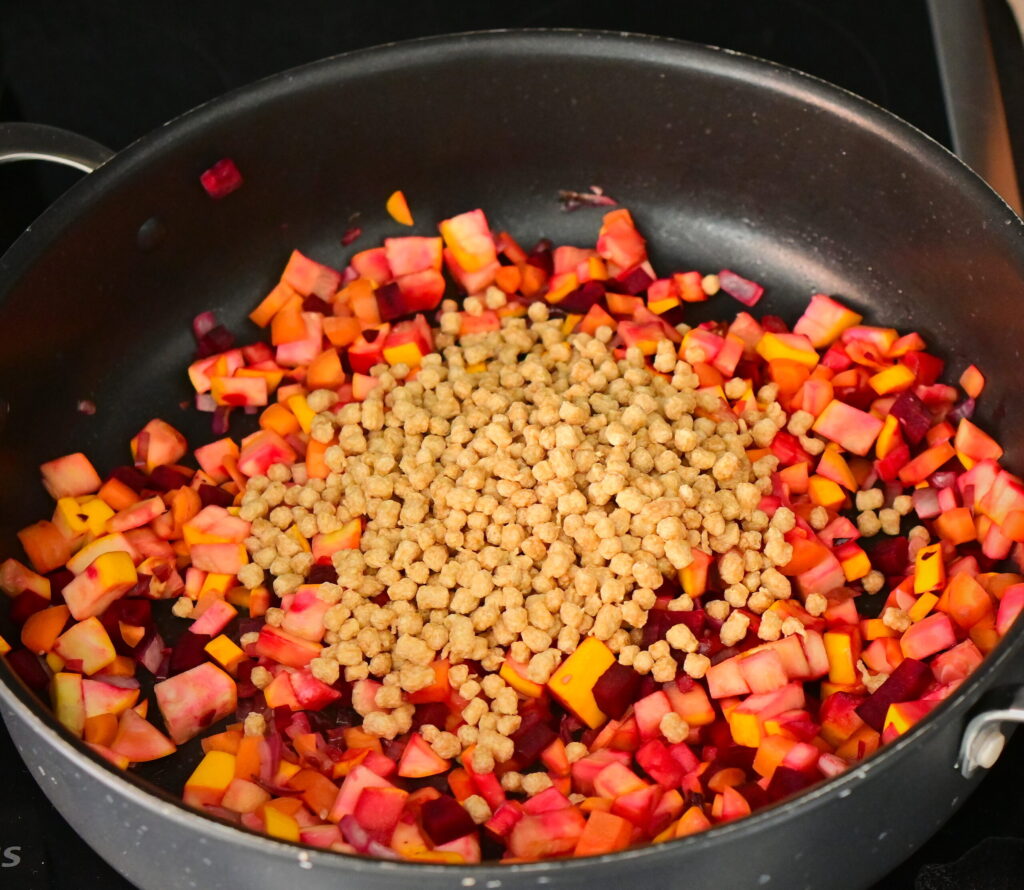
- Cook the root vegetables and add the TVP – Add the diced beet and carrot and cook for about 4 minutes, stirring occasionally, until they begin to soften. Add the TVP and chopped garlic and stir everything together.
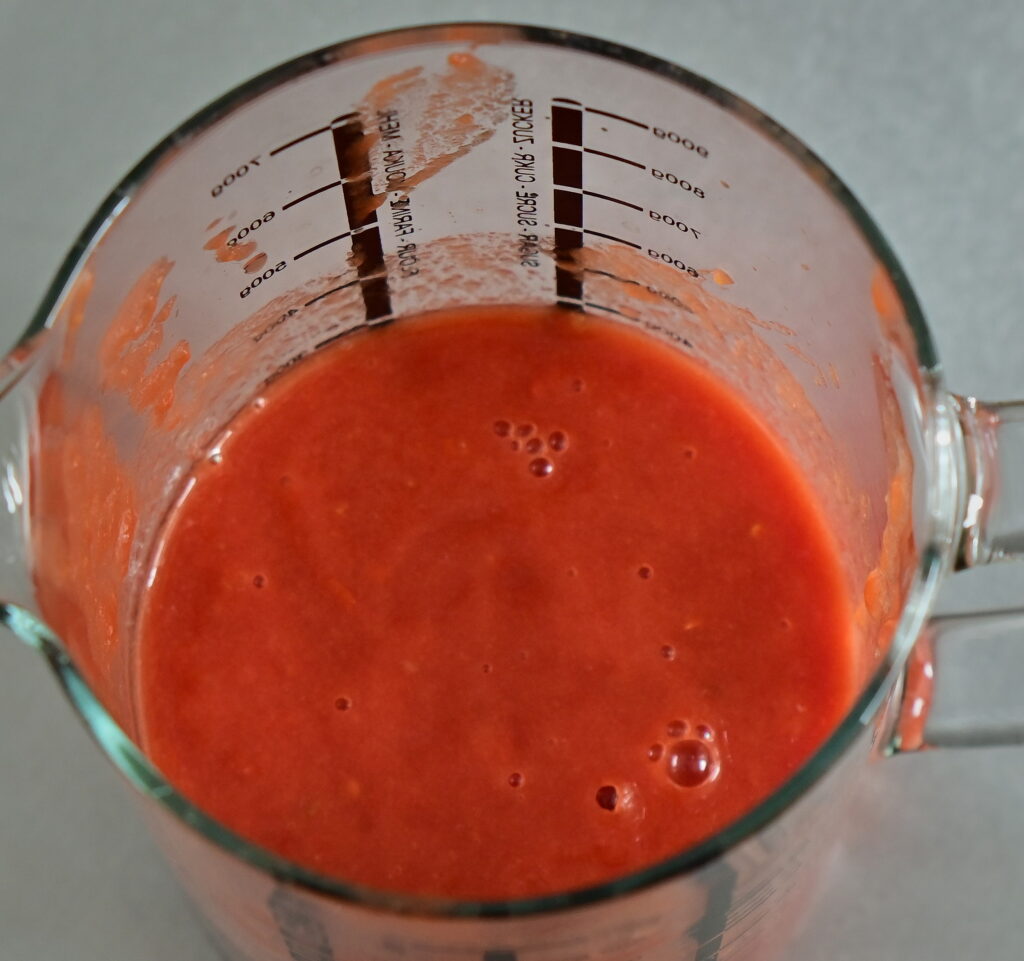
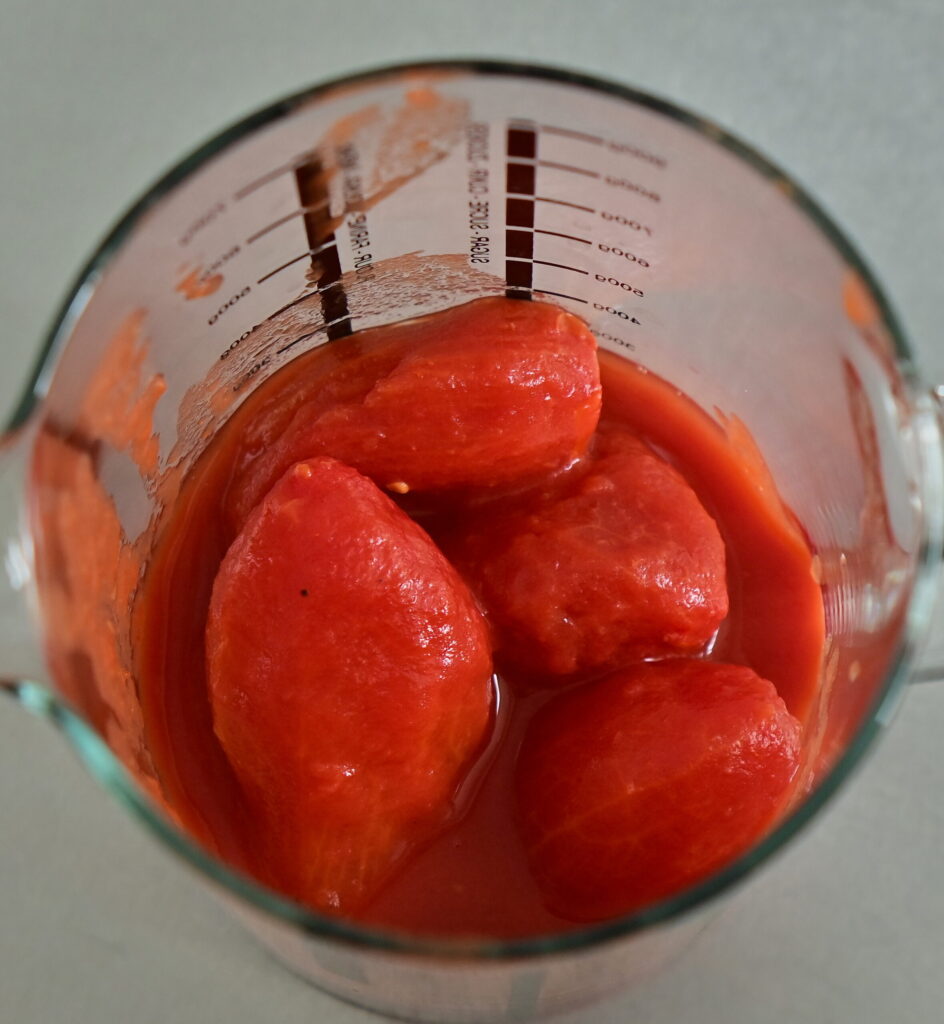
- Blend the tomato sauce – While the vegetables are cooking, add the tomato sauce ingredients to a blender (or immersion blender). Blend until smooth. If you don't have a blender, finely chop the canned tomatoes instead and add the remaining sauce ingredients directly to the skillet (when it's time).
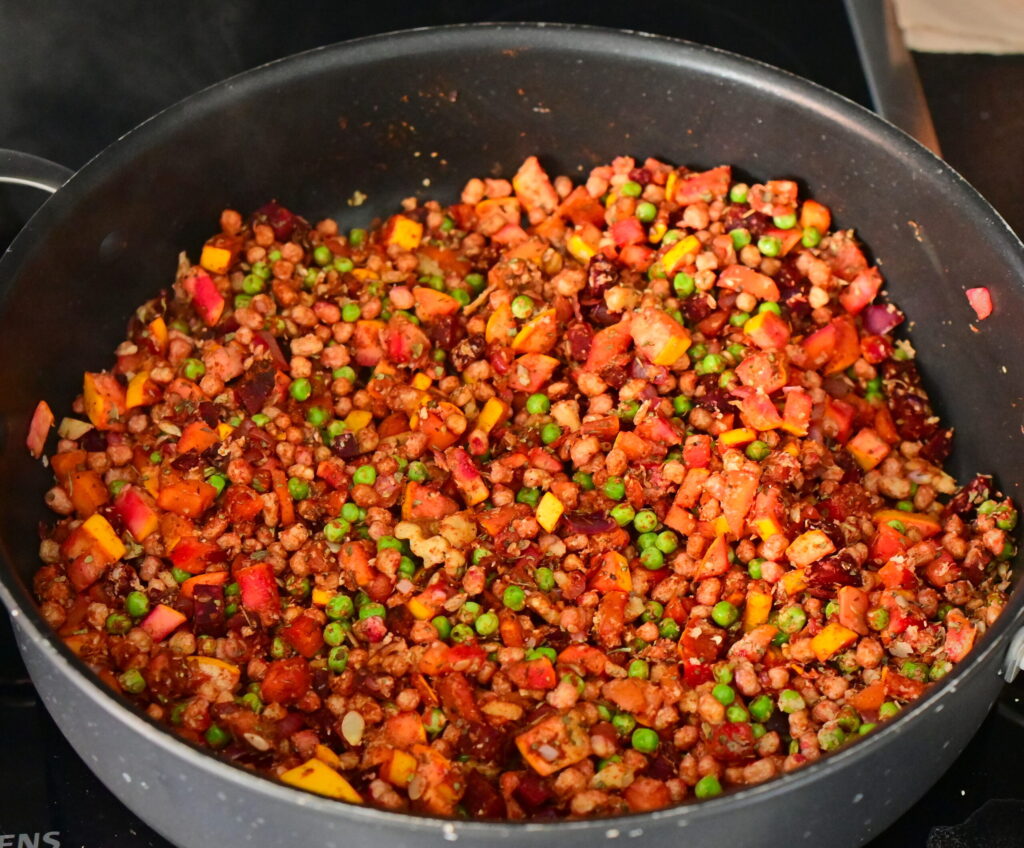
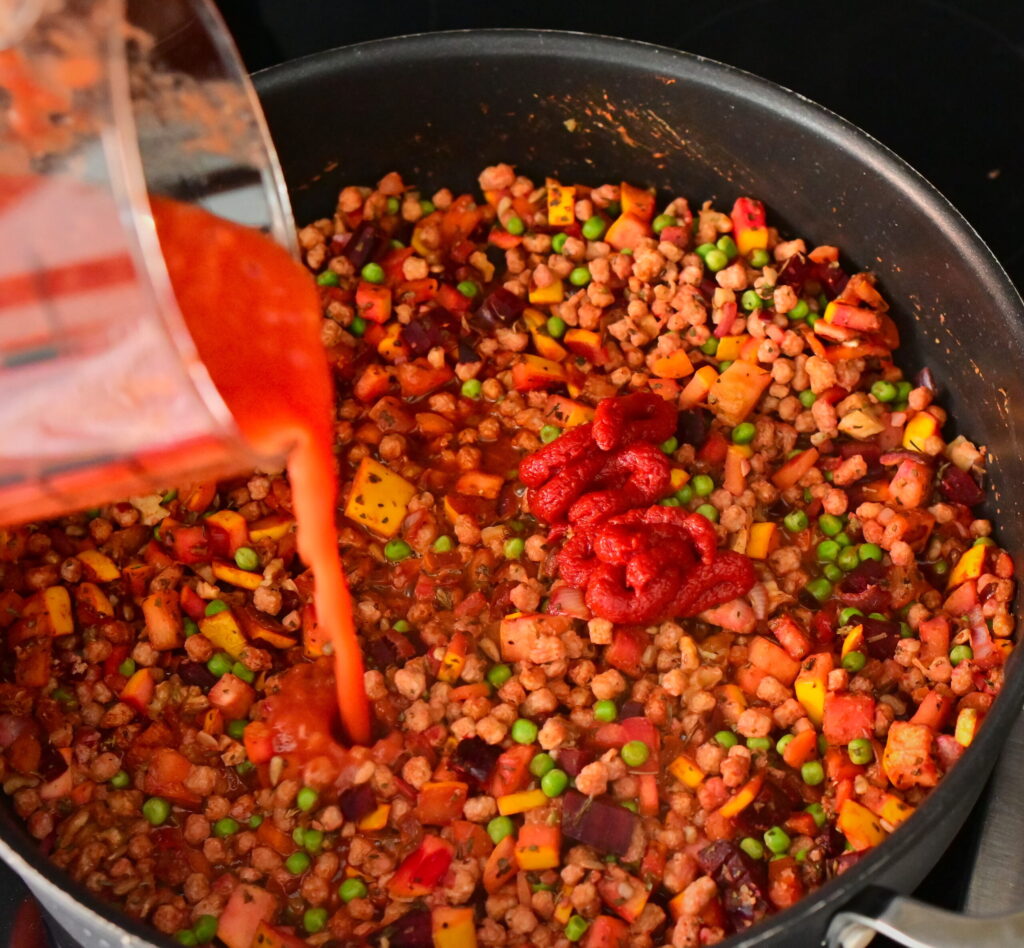
- Add the seasonings and mix well – Add the spices, walnuts and peas, cook for about 3 minutes, then add the boiling water and tomato sauce. Stir well to combine, cover, and cook for 5 minutes.
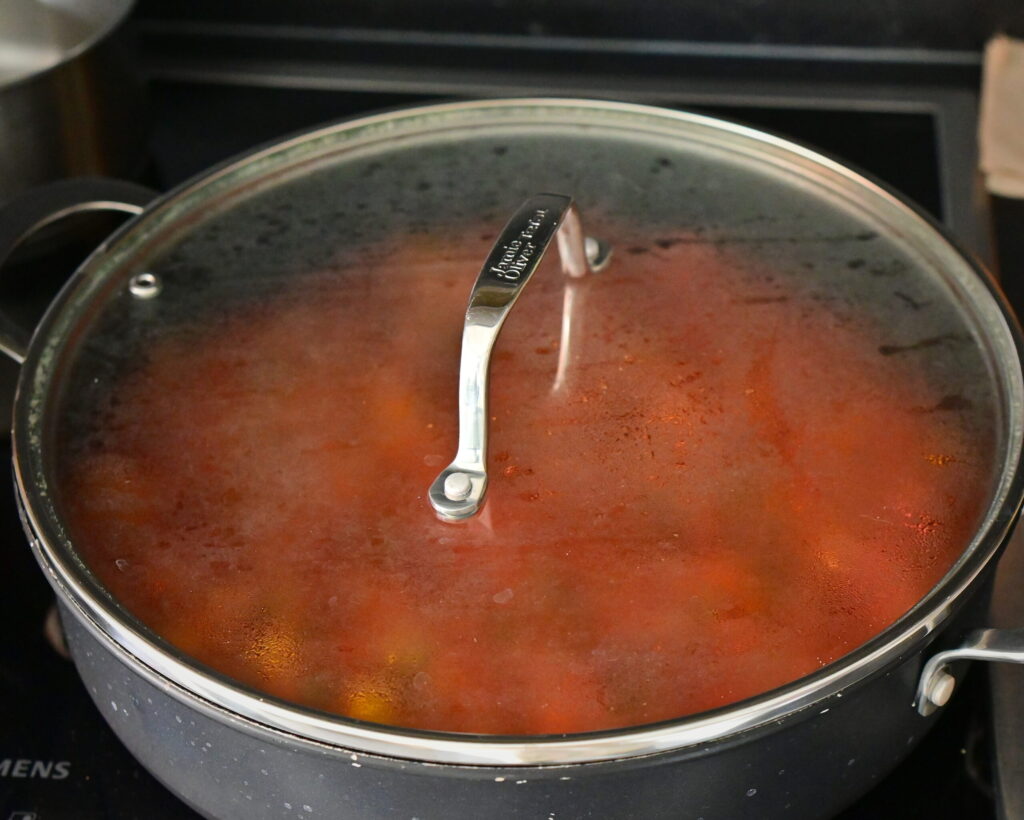
- Cook the mince – Let the mixture cook covered for about 5 minutes, stirring occasionally. Add the boiling water and tomato sauce, stir well to combine, then cover the skillet and cook for another 5 minutes.
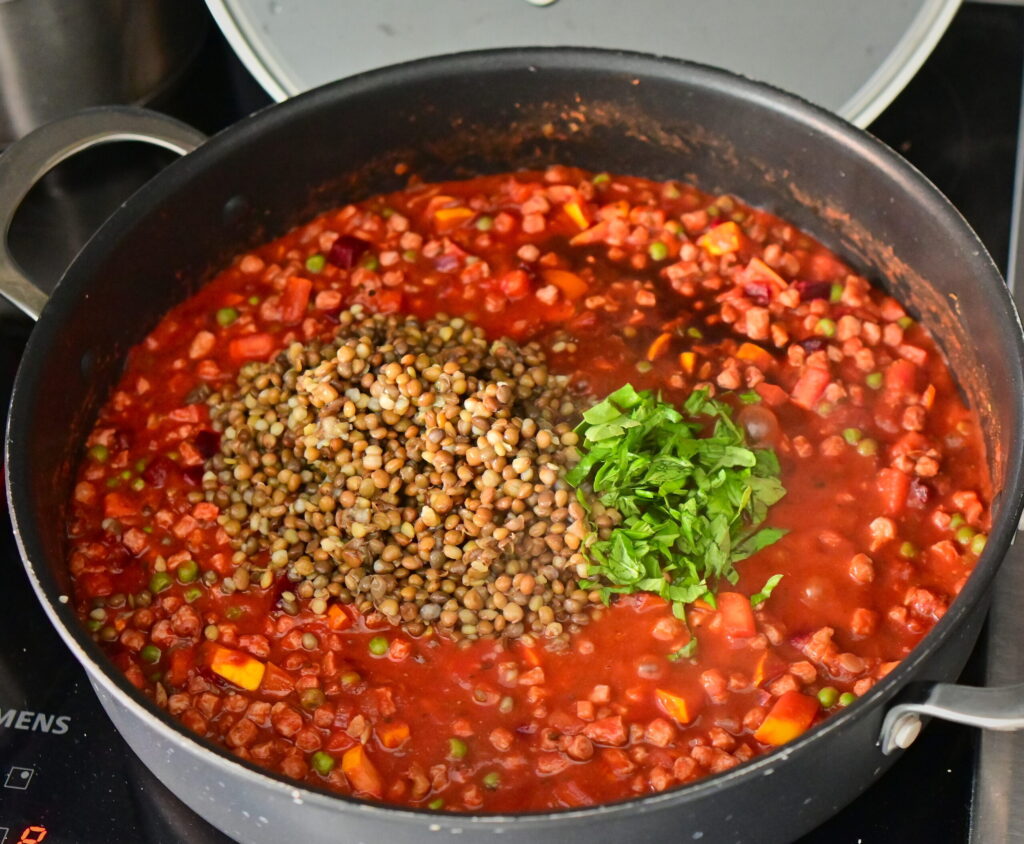
- Add the remaining ingredients. Stir gently but thoroughly so the lentils remain mostly intact. Cover the skillet again and cook for another 5 minutes. Taste and adjust the seasoning if needed. The finished mixture should be thick, hearty, and moist but not watery.
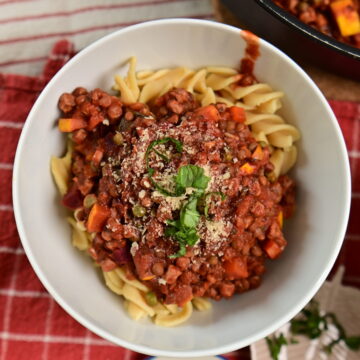
- Serve your way – Serve it with pasta or rice, use it as a filling for lasagna, spoon it into sloppy joes, or add it to tacos, burritos, pizza, or whatever meal you are craving.
Notes
- TVP substitute: You can use another protein source you like, such as diced tofu, tempeh, or pieces of seitan. Alternatively, you can add more lentils or peas. This recipe is designed to be flexible, so use what you have and what you enjoy.
- IBS: Since this recipe is very high in fiber, take extra care with the legumes, especially if you are sensitive to them. They may trigger IBS symptoms. You can reduce or omit either the peas or lentils, or simply use a smaller amount. The recipe as written is not low-FODMAP because of the onion, garlic, legumes, and potentially wheat-based TVP.
- Gluten-free: To make this recipe gluten-free, use certified gluten-free TVP and make sure all other packaged ingredients, particularly the passata, canned tomatoes, and nutritional yeast, are gluten-free if necessary.
- Nut-free: For a nut-free version, replace the walnuts with additional sunflower seeds, pumpkin seeds, or simply leave them out.
- Storing: Store the cooked mince in an airtight container in the refrigerator for up to 5 days. Allow it to cool before refrigerating.
- Freezing: This recipe is very meal-prep friendly and freezes well. Freeze in individual portions for easy meals later. Thaw overnight in the refrigerator or reheat directly from frozen over low heat with a splash of water.
- Reheating: Reheat in a skillet over medium heat, stirring occasionally and adding a splash of water if the mixture has thickened too much. You can also reheat individual portions in the microwave.
- How to use it: Serve it with pasta or rice, layer it into lasagna, use it as a sloppy joe filling, shepherd’s pie, spoon it over pizza, or add it to tacos and burritos. You can also use it anywhere you would normally use vegan mince.
- Meal prep: Make one large batch and divide it into portions. Changing the way you serve it throughout the week keeps the base interesting without requiring you to cook a completely different meal every day.