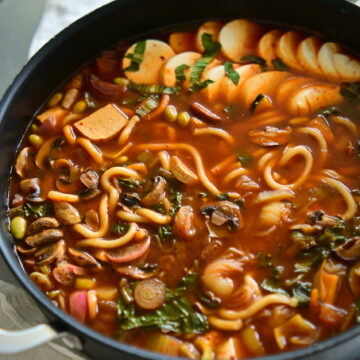
Vegan Korean Army Stew (Budae Jjigae-Inspired)

Inspired by Budae Jjigae (Korean Army Base Stew), this vegan one-pot stew combines vegetables, tofu, noodles, and a rich Korean-inspired broth. It's quick to make, easy to customize, and perfect for a cozy weeknight meal.
Share with WhatsApp
Equipment
- Deep sauté pan or shallow pot
- Knife
- Cutting board
- Large measuring jug - or a bowl (to mix the broth & thickener)
- whisk
Ingredients
Vegetables
- ½ zucchini
- 200-300 g mushrooms (I used button/champignon and shiitake mushrooms; king oyster, oyster, portobello, or shimeji also work well)
- 1 large bok choy
- 1 green onion
- 1 medium-large carrot
- ½ medium white onion
- 4-6 small radishes
- 1 tsp grated ginger
- 1 tsp grated garlic (optional, skip if sensitive)
Protein
- ⅓ cup frozen edamame
- 200 g firm tofu
- 250 g silken tofu
Noodles
- 200 g udon noodles
- 130 g shirataki (konjac noodles (knots))
Broth
- ⅓ cup low-sodium soy sauce
- 1-2 tbsp gochugaru (optional)
- 1-1½ tbsp gochujang (optional)
- 1 tbsp rice vinegar
- Juice of 1 lime
- ½ tbsp coconut sugar
- 1 L boiling water
Optional Thickener
- 1½ tbsp miso
- 1 tbsp starch (arrowroot, cornstarch, potato starch, or tapioca starch)
- ½ cup boiling water
Instructions
Prepping
- Prep the vegetables – Cut the zucchini, mushrooms, carrot, onion, bok choy, and radishes into medium-small pieces. Separate the white and green parts of the green onion, and set aside the bok choy leaves together with the green onion tops for later. Grate the ginger and garlic (if using).
- Prepare the tofu – Cut the firm tofu into cubes. The silken tofu can be cut into large pieces now or added whole and gently divided into large pieces in the pan later.
- Arrange the ingredients – In a deep pan or shallow pot, drizzle in a little sesame oil (optional). Arrange the onion, carrot, zucchini, mushrooms, radishes, grated ginger, grated garlic (if using), firm tofu, and frozen edamame in an even layer, packing everything closely together.
- Optional: Turn on the heat so the pot warms up while you prepare the broth.
- Make the broth – In a large measuring jug or bowl, whisk together the soy sauce, gochugaru (if using), gochujang (if using), rice vinegar, lime juice, coconut sugar, and boiling water until well combined.
Cooking
- Cook the stew – Pour the hot broth over the vegetables and tofu. Gently press the vegetables and tofu down so they're as submerged in the broth as possible. Cover the pan and bring to a boil over medium-high heat. Once boiling, cook for about 5 minutes, until the vegetables begin to soften.
- Add the noodles and silken tofu – Add the udon noodles and shirataki (konjac) noodles, gently separating them if needed. Carefully slide the silken tofu into one side of the pan to help keep it intact while it cooks. If you haven't cut it yet, gently use a spoon to divide it into large pieces directly in the broth.
- Finish cooking – Scatter the bok choy leaves and the green parts of the green onion over the top. Cover again and cook for another 3–5 minutes, or until the noodles are heated through, the mushrooms are tender, the bok choy is just wilted, and the tofu is warmed through.
- Optional thickener – In a small bowl, whisk together the miso, starch, and boiling water until smooth. Remove the stew from the heat, stir in the thickener, and gently mix until the broth becomes slightly richer and silkier.
- Serve – Serve immediately while hot. Enjoy as is, or garnish with extra lime wedges, more gochugaru, sesame seeds, or chili crisp if you'd like a little extra heat.
Notes
- IBS-friendly: Omit the onion and garlic if they're triggers for you, or replace the garlic with garlic-infused oil. Reduce or skip the gochugaru and gochujang if you're sensitive to spicy foods. Choose only the vegetables and mushrooms you tolerate best.
- Gluten-free: Use gluten-free tamari instead of soy sauce and swap the udon noodles for rice noodles or gluten-free noodles. Always check that your gochujang and miso are certified gluten-free if needed.
- Soy-free: Replace the tofu and edamame with vegan sausages, seitan (if you eat gluten), butter beans, chickpeas, lupini beans, or your favorite soy-free plant protein. Use coconut aminos instead of soy sauce and chickpea miso or simply omit the miso.
- Storage: Store leftovers in an airtight container in the refrigerator for up to 3 days. The noodles will continue to absorb the broth as they sit.
- Reheating: Reheat gently on the stovetop over medium-low heat or in the microwave until warmed through. Stir carefully to keep the silken tofu intact.
- Nut-free: This recipe is naturally nut-free. If using any packaged sauces or vegan protein alternatives, check the labels for potential cross-contamination if needed.