Cozy enough to cancel your plans.
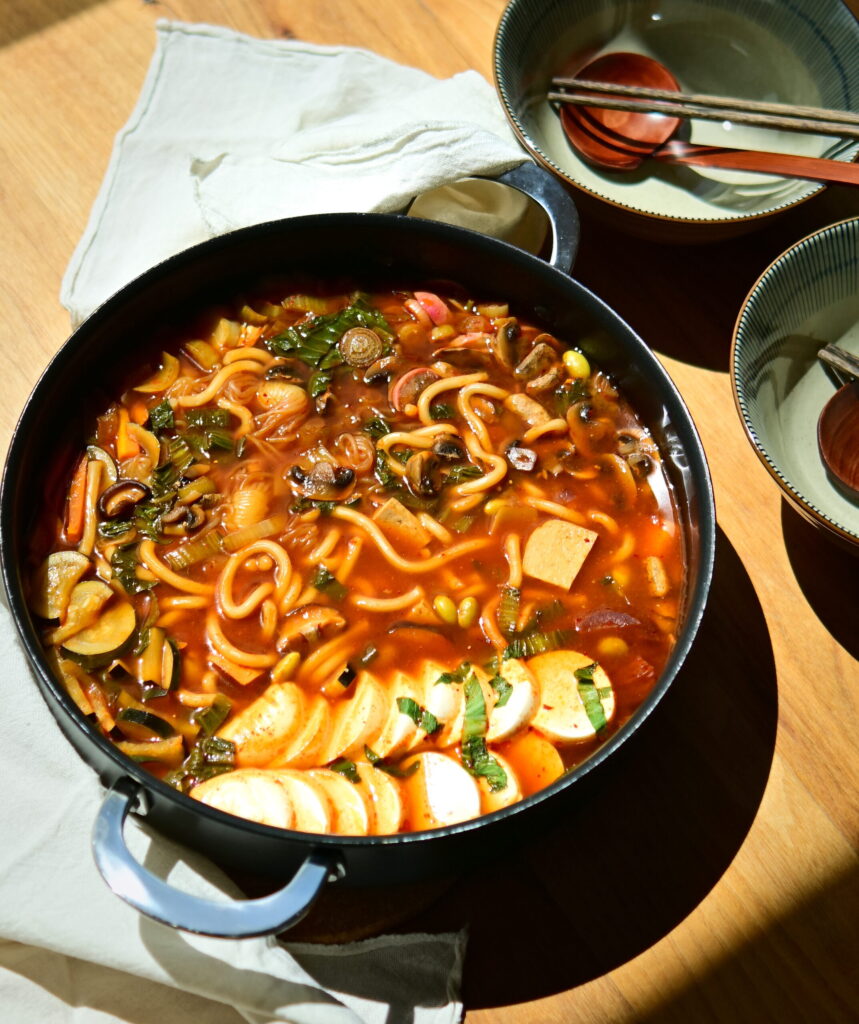
Table of contents
About this recipe
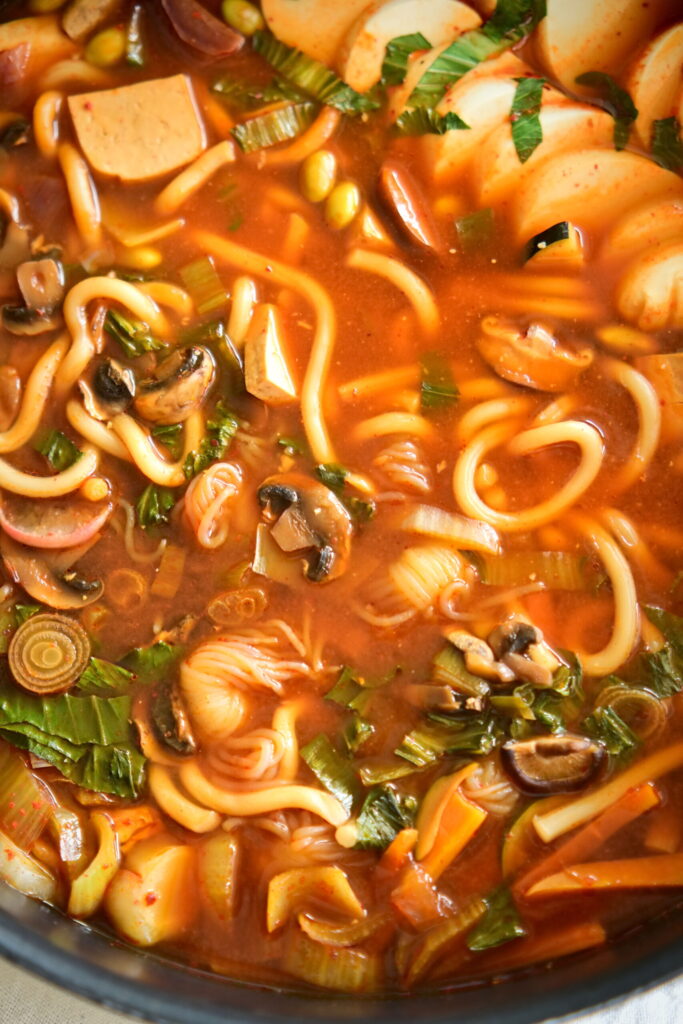
I wanted something cozy, nourishing, and packed with vegetables that didn’t require hours in the kitchen (less than 30 minutes!!). Instead of following a traditional recipe, I built it around ingredients I usually have at home, making it easy to customize with whatever vegetables or proteins you have available. Everything cooks together in one pot, creating a rich, flavorful broth with very little effort. The combination of chewy noodles, tender vegetables, and silky tofu makes every bite incredibly comforting. It’s naturally vegan, easy to adapt for different dietary needs, and perfect for busy weeknights. Whether you’re looking for a quick dinner or a comforting meal to share, this hot pot always delivers.
The Story Behind Budae Jjigae (Korean Army Stew)
Budae Jjigae (부대찌개), often translated as Korean Army Stew, is one of Korea’s most fascinating comfort foods. The dish was created after the Korean War (1950–1953), when food shortages led people living near U.S. military bases to creatively combine surplus ingredients—such as Spam, hot dogs, baked beans, and processed cheese—with traditional Korean staples like kimchi, gochujang, garlic, and noodles.
Over time, what began as a meal born out of necessity evolved into one of Korea’s most beloved stews. Today, Budae Jjigae is served in restaurants across South Korea, often cooked at the table and shared with family and friends. While many modern versions still include processed meats, countless home cooks have created vegetarian and vegan interpretations inspired by the same bold, comforting flavors.
This recipe is not a traditional Budae Jjigae. Instead, it’s my vegan, vegetable-packed interpretation inspired by the hearty spirit of the original. Rather than recreating the classic ingredients, I focus on a rich Korean-inspired broth, plenty of vegetables, tofu, and noodles to create a quick, satisfying one-pot meal.

IBS & Low-FODMAP Tips:
- Omit the onion or replace it with the green tops of extra spring onions.
- Replace the mushrooms with oyster mushrooms if they’re better tolerated.
- Use firm tofu only if silken tofu isn’t well tolerated.
- Reduce the amount of gochujang if spicy foods trigger your IBS.
- Choose rice noodles instead of wheat udon if gluten is a concern.
- Use gluten-free tamari for a gluten-free version.
- Start with a smaller serving if you’re unsure how your digestive system responds to spicy foods.
Why This Stew Is Healthy
This Korean-inspired stew (Budae Jjigae) is packed with nutrient-dense vegetables, plant-based protein, and a flavorful broth that comes together without frying or heavy sauces. Since everything cooks directly in the broth, the vegetables stay tender while retaining much of their natural goodness.
The combination of tofu and edamame provides complete plant protein to help keep you satisfied, while mushrooms add natural umami along with antioxidants and B vitamins. Bok choy, carrots, and zucchini contribute fiber, vitamin C, vitamin A, potassium, and other important micronutrients.
Using a broth-based cooking method also keeps the meal lighter than many creamy or oil-heavy dishes. If you use low-sodium soy sauce, you can easily reduce the overall sodium content while still getting plenty of flavor from the gochujang, lime juice, mushrooms, and aromatics.
Because the recipe is highly customizable, it’s easy to increase the vegetables, swap the noodles, or choose different protein sources depending on your dietary preferences.

Ingredient Notes & Substitutes
Vegetables
Zucchini – Adds freshness and absorbs the broth beautifully. Substitute: Yellow squash, eggplant or extra bok choy.
Mushrooms – I used button (champignon) and shiitake mushrooms, but king oyster, oyster, portobello, or shimeji all work wonderfully. They add a rich, savory umami flavor and a meaty texture.
Bok choy – Adds freshness while staying slightly crisp after cooking. Substitute: Napa cabbage, baby spinach, or Swiss chard.
Green onion – The white parts flavor the broth, while the green tops are added at the end for freshness. Substitute: Chives or leek (green parts only).
Carrot – Adds sweetness, color, and a slight crunch.
White onion – Gives the broth extra depth of flavor. Substitute: Shallots or omit for an IBS-friendly version.
Radishes – Add a mild peppery flavor that becomes sweeter as they cook while staying pleasantly tender. Substitute: Daikon radish, turnips, or simply leave them out.
Fresh ginger – Adds warmth, brightness, and aromatic depth to the broth. Substitute: Ground ginger (about ¼ tsp) or omit if preferred.
Fresh garlic – Brings savory depth and classic Korean-inspired flavor. Substitute: Garlic-infused oil for an IBS-friendly option, garlic powder, or omit if sensitive.
Frozen edamame – Adds protein, fiber, and texture. Substitute: Shelled peas, butter beans, chickpeas, lupini beans, or vegan sausages for a soy-free option.
Protein
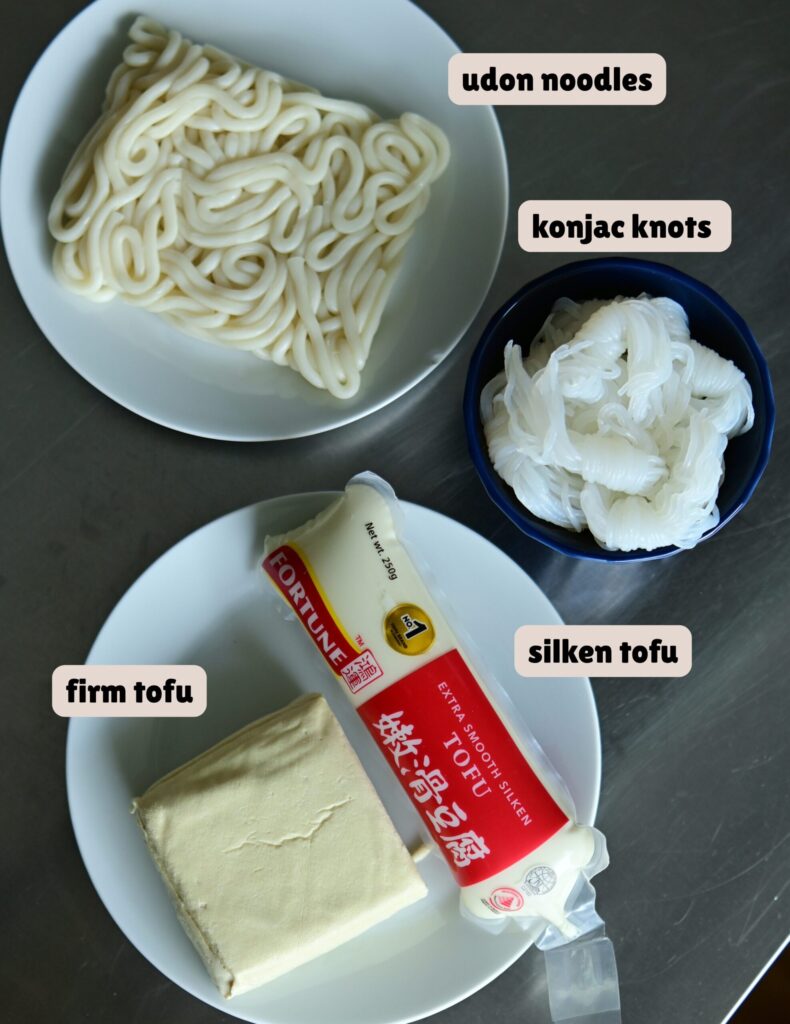
Firm tofu – Holds its shape while soaking up the broth. Substitute: Seitan, vegan chicken pieces, butter beans, lupini beans, or chickpeas.
Silken tofu – Makes the stew extra comforting with its soft, creamy texture. It absorbs the broth as it cooks and is highly recommended. Substitute: More firm tofu or simply omit if preferred.
Noodles
Udon noodles – Thick, chewy noodles that make the stew extra satisfying. Substitute: Ramen, rice noodles, soba noodles, or any quick-cooking noodles.
Shirataki (Konjac) noodles (knots) – Made from the konjac root, these noodles have a springy, chewy texture that adds bite to the stew without overpowering the other ingredients. They absorb the flavorful broth well, add extra volume, and are naturally low in calories and carbohydrates. Rinse them well before using to remove their natural aroma. Substitute: Extra udon, glass noodles, rice noodles, or omit.
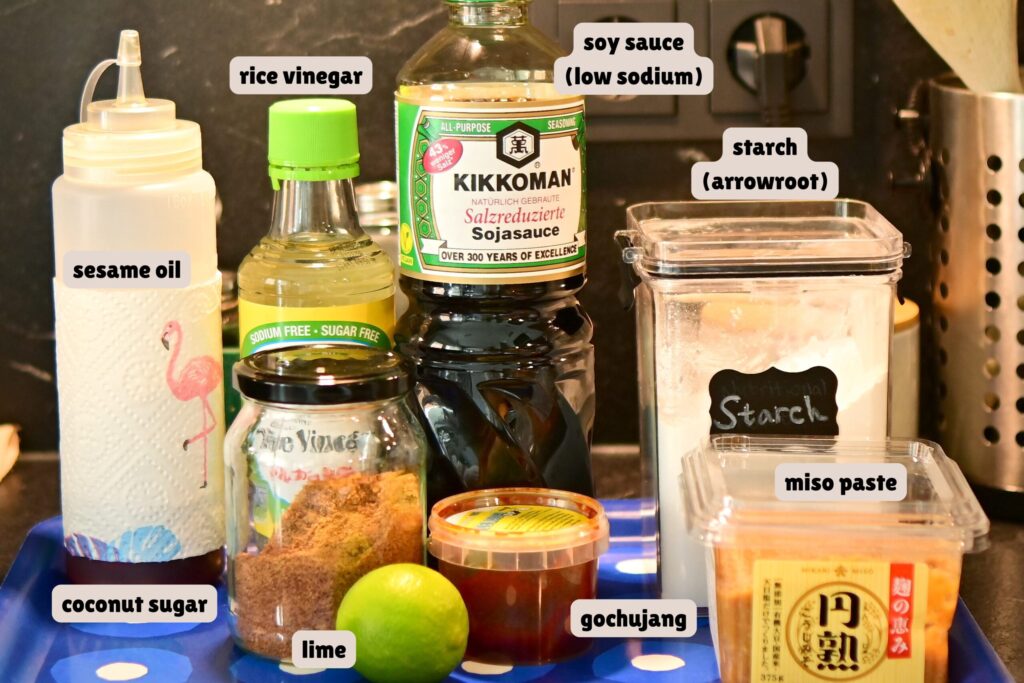
Broth
Soy sauce – Forms the savory base of the broth. Substitute: Tamari for gluten-free or coconut aminos for a soy-free version.
Gochugaru – Korean chili flakes that provide gentle heat and a mild smoky flavor. Substitute: Chilli flakes (use less).
Gochujang – Adds Korean chili flavor, sweetness, and umami. Substitute: Omit for a milder broth, or a little chili paste.
Rice vinegar – Balances the richness with acidity. Substitute: Apple cider vinegar or white wine vinegar.
Lime juice – Brightens the broth. Substitute: Lemon juice.
Coconut sugar – Balances the salty and spicy flavors with a subtle caramel note. Substitute: Brown sugar, maple syrup, or cane sugar.
Boiling water – Creates the broth. Substitute: Vegetable broth for even more flavor.
Thickener
Miso – Optional, but adds extra umami, richness, and depth.
Starch (Arrowroot) – Thickens the broth slightly for a silkier texture. Substitute: Tapioca starch, cornstarch, or potato starch.
Step-by-step short instructions



Recipe card with notes
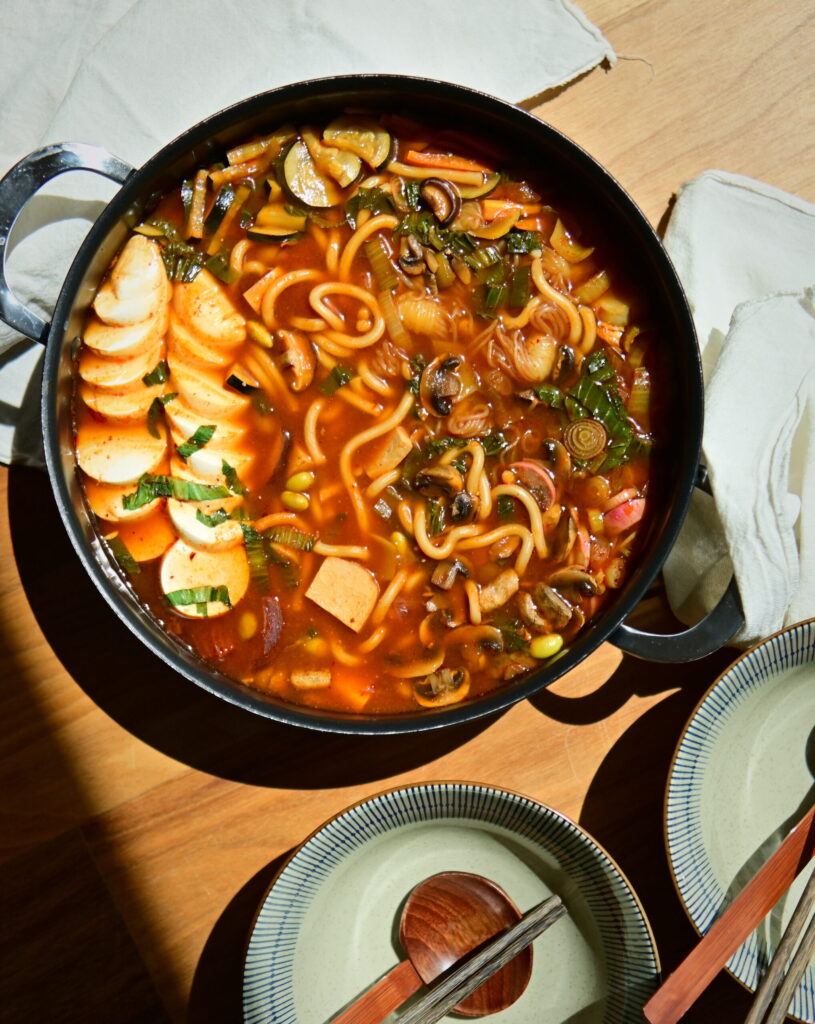
Vegan Korean Army Stew (Budae Jjigae-Inspired)

Equipment
- Deep sauté pan or shallow pot
- Knife
- Cutting board
- Large measuring jug - or a bowl (to mix the broth & thickener)
- whisk
Ingredients
- ½ zucchini
- 200-300 g mushrooms (I used button/champignon and shiitake mushrooms; king oyster, oyster, portobello, or shimeji also work well)
- 1 large bok choy
- 1 green onion
- 1 medium-large carrot
- ½ medium white onion
- 4-6 small radishes
- 1 tsp grated ginger
- 1 tsp grated garlic (optional, skip if sensitive)
- ⅓ cup frozen edamame
- 200 g firm tofu
- 250 g silken tofu
- 200 g udon noodles
- 130 g shirataki (konjac noodles (knots))
- ⅓ cup low-sodium soy sauce
- 1-2 tbsp gochugaru (optional)
- 1-1½ tbsp gochujang (optional)
- 1 tbsp rice vinegar
- Juice of 1 lime
- ½ tbsp coconut sugar
- 1 L boiling water
- 1½ tbsp miso
- 1 tbsp starch (arrowroot, cornstarch, potato starch, or tapioca starch)
- ½ cup boiling water
Instructions
Prepping
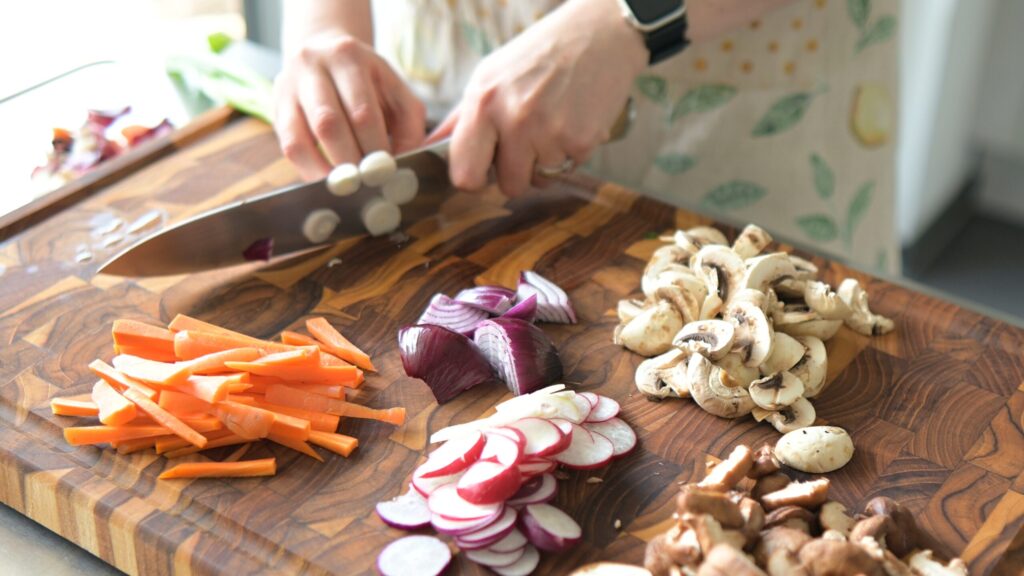
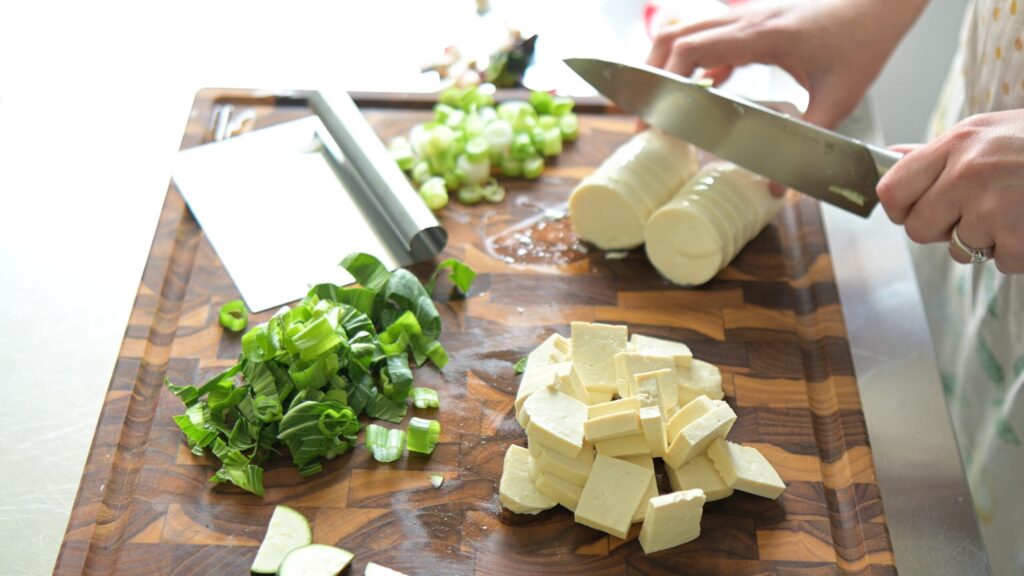
- Prep the vegetables – Cut the zucchini, mushrooms, carrot, onion, bok choy, and radishes into medium-small pieces. Separate the white and green parts of the green onion, and set aside the bok choy leaves together with the green onion tops for later. Grate the ginger and garlic (if using).
- Prepare the tofu – Cut the firm tofu into cubes. The silken tofu can be cut into large pieces now or added whole and gently divided into large pieces in the pan later.
- Arrange the ingredients – In a deep pan or shallow pot, drizzle in a little sesame oil (optional). Arrange the onion, carrot, zucchini, mushrooms, radishes, grated ginger, grated garlic (if using), firm tofu, and frozen edamame in an even layer, packing everything closely together.
- Optional: Turn on the heat so the pot warms up while you prepare the broth.
- Make the broth – In a large measuring jug or bowl, whisk together the soy sauce, gochugaru (if using), gochujang (if using), rice vinegar, lime juice, coconut sugar, and boiling water until well combined.
Cooking
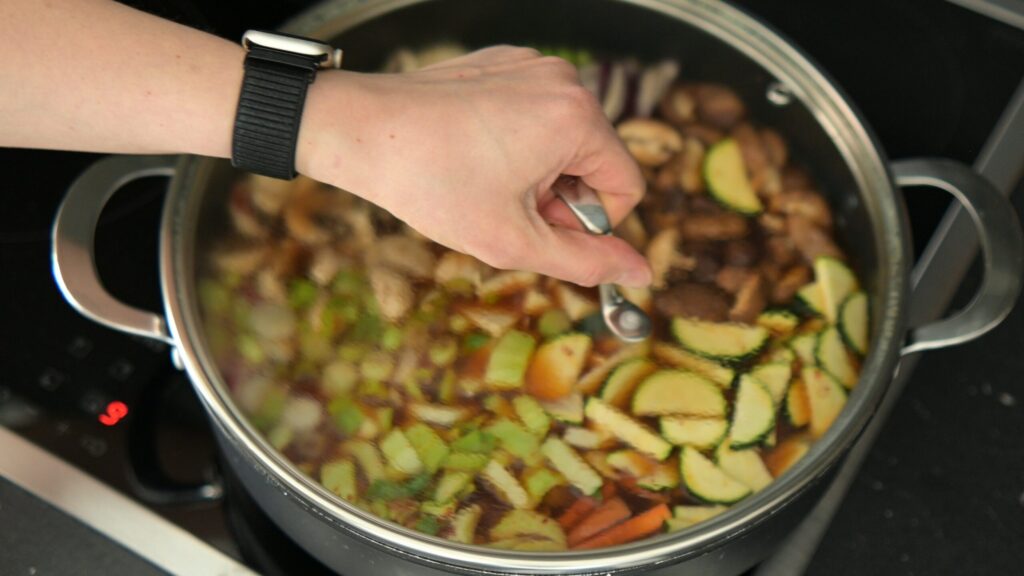
- Cook the stew – Pour the hot broth over the vegetables and tofu. Gently press the vegetables and tofu down so they're as submerged in the broth as possible. Cover the pan and bring to a boil over medium-high heat. Once boiling, cook for about 5 minutes, until the vegetables begin to soften.
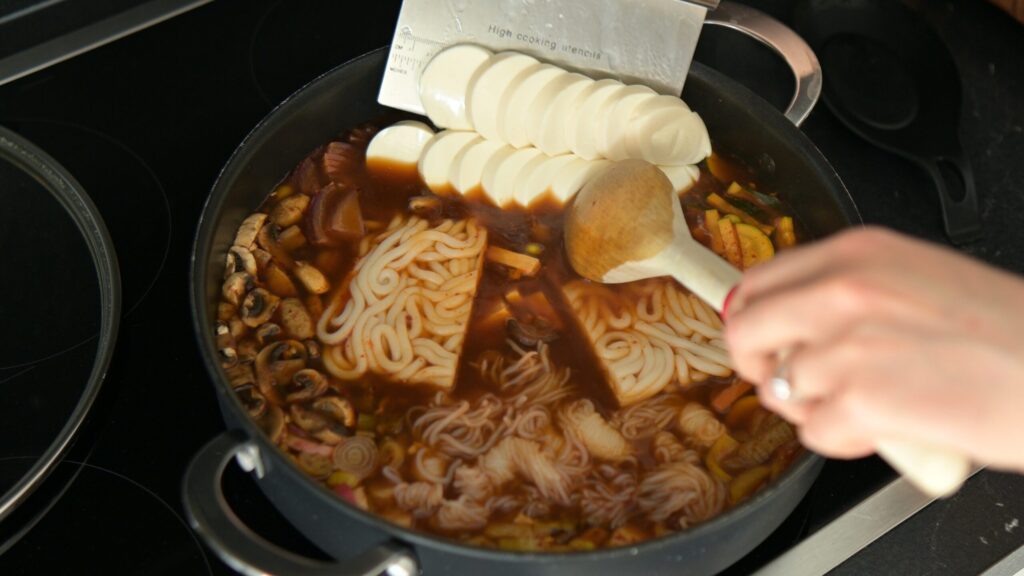
- Add the noodles and silken tofu – Add the udon noodles and shirataki (konjac) noodles, gently separating them if needed. Carefully slide the silken tofu into one side of the pan to help keep it intact while it cooks. If you haven't cut it yet, gently use a spoon to divide it into large pieces directly in the broth.
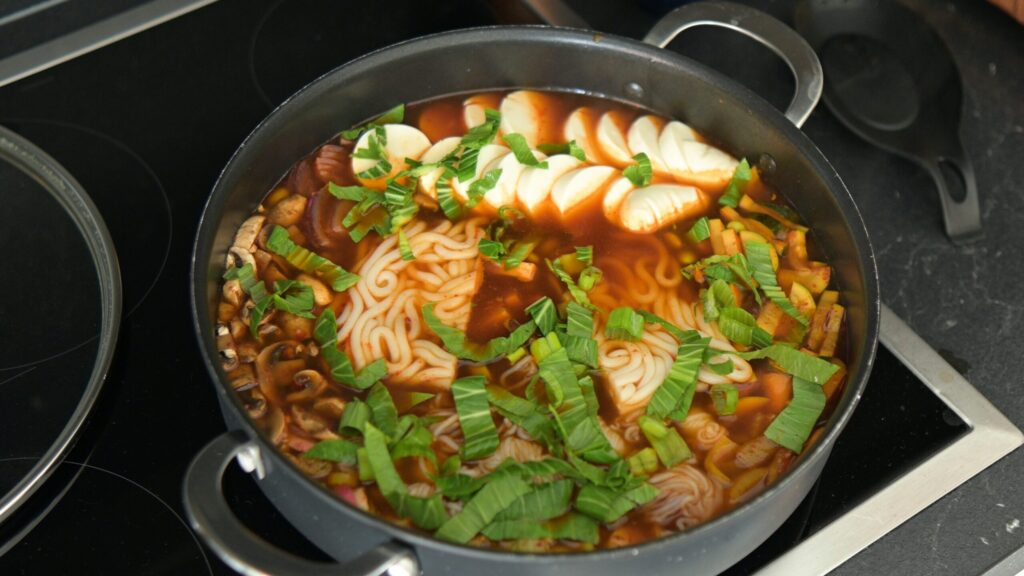
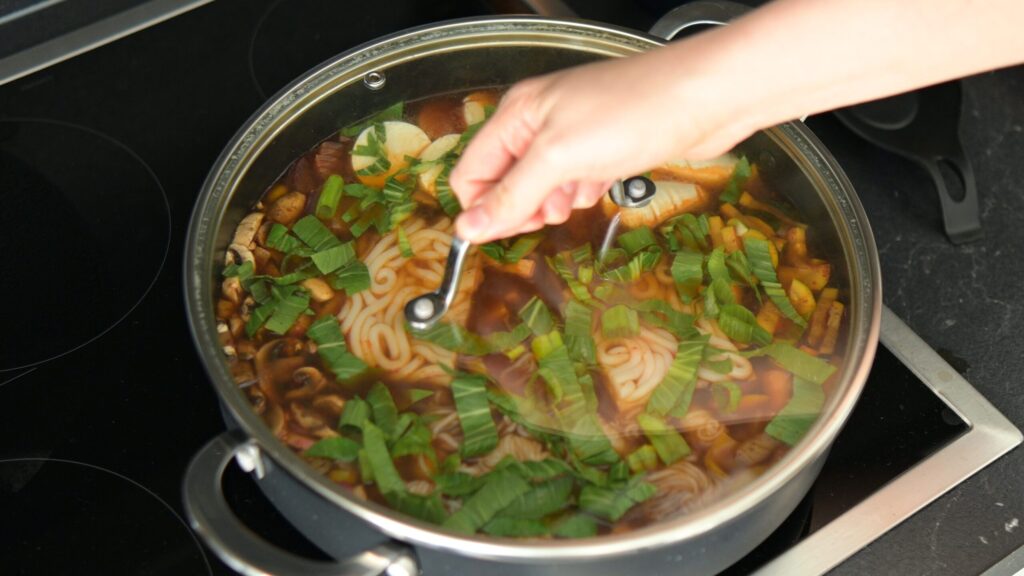
- Finish cooking – Scatter the bok choy leaves and the green parts of the green onion over the top. Cover again and cook for another 3–5 minutes, or until the noodles are heated through, the mushrooms are tender, the bok choy is just wilted, and the tofu is warmed through.
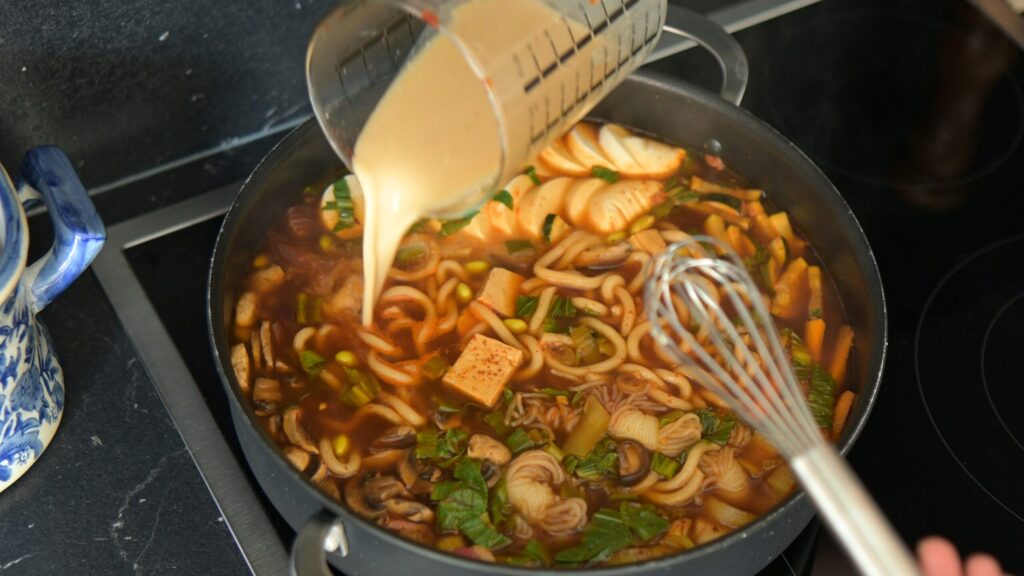
- Optional thickener – In a small bowl, whisk together the miso, starch, and boiling water until smooth. Remove the stew from the heat, stir in the thickener, and gently mix until the broth becomes slightly richer and silkier.
- Serve – Serve immediately while hot. Enjoy as is, or garnish with extra lime wedges, more gochugaru, sesame seeds, or chili crisp if you'd like a little extra heat.
Notes
- IBS-friendly: Omit the onion and garlic if they’re triggers for you, or replace the garlic with garlic-infused oil. Reduce or skip the gochugaru and gochujang if you’re sensitive to spicy foods. Choose only the vegetables and mushrooms you tolerate best.
- Gluten-free: Use gluten-free tamari instead of soy sauce and swap the udon noodles for rice noodles or gluten-free noodles. Always check that your gochujang and miso are certified gluten-free if needed.
- Soy-free: Replace the tofu and edamame with vegan sausages, seitan (if you eat gluten), butter beans, chickpeas, lupini beans, or your favorite soy-free plant protein. Use coconut aminos instead of soy sauce and chickpea miso or simply omit the miso.
- Storage: Store leftovers in an airtight container in the refrigerator for up to 3 days. The noodles will continue to absorb the broth as they sit.
- Reheating: Reheat gently on the stovetop over medium-low heat or in the microwave until warmed through. Stir carefully to keep the silken tofu intact.
- Nut-free: This recipe is naturally nut-free. If using any packaged sauces or vegan protein alternatives, check the labels for potential cross-contamination if needed.